Introduction
The SPF step is supposed to be the last thing you apply before makeup. Simple enough — except for the moment the foundation goes on and your sunscreen starts balling up in tiny rolled flakes across your cheeks. Pilling is one of the most frustrating skin care problems because it does not just ruin the makeup application — it signals that the SPF is coming off rather than staying on and protecting your skin.
How to layer sunscreen under makeup without pilling is a more specific question than it looks, because pilling is almost never the fault of one product alone. It is usually a combination issue — the wrong formula pairing, the wrong application technique, or skipping the absorption time that the formula needs before anything else lands on top of it. This guide covers exactly what causes pilling, how to stop it, whether pilled SPF still works (short answer: it does not), and how to build an SPF-to-makeup layering routine that stays in place through a full day in Pakistan’s heat. Explore the Gleamcia Skin Care range for SPF formulas designed to sit cleanly under makeup without pilling or leaving a white cast.
What Is Sunscreen Pilling and Why Does It Happen?
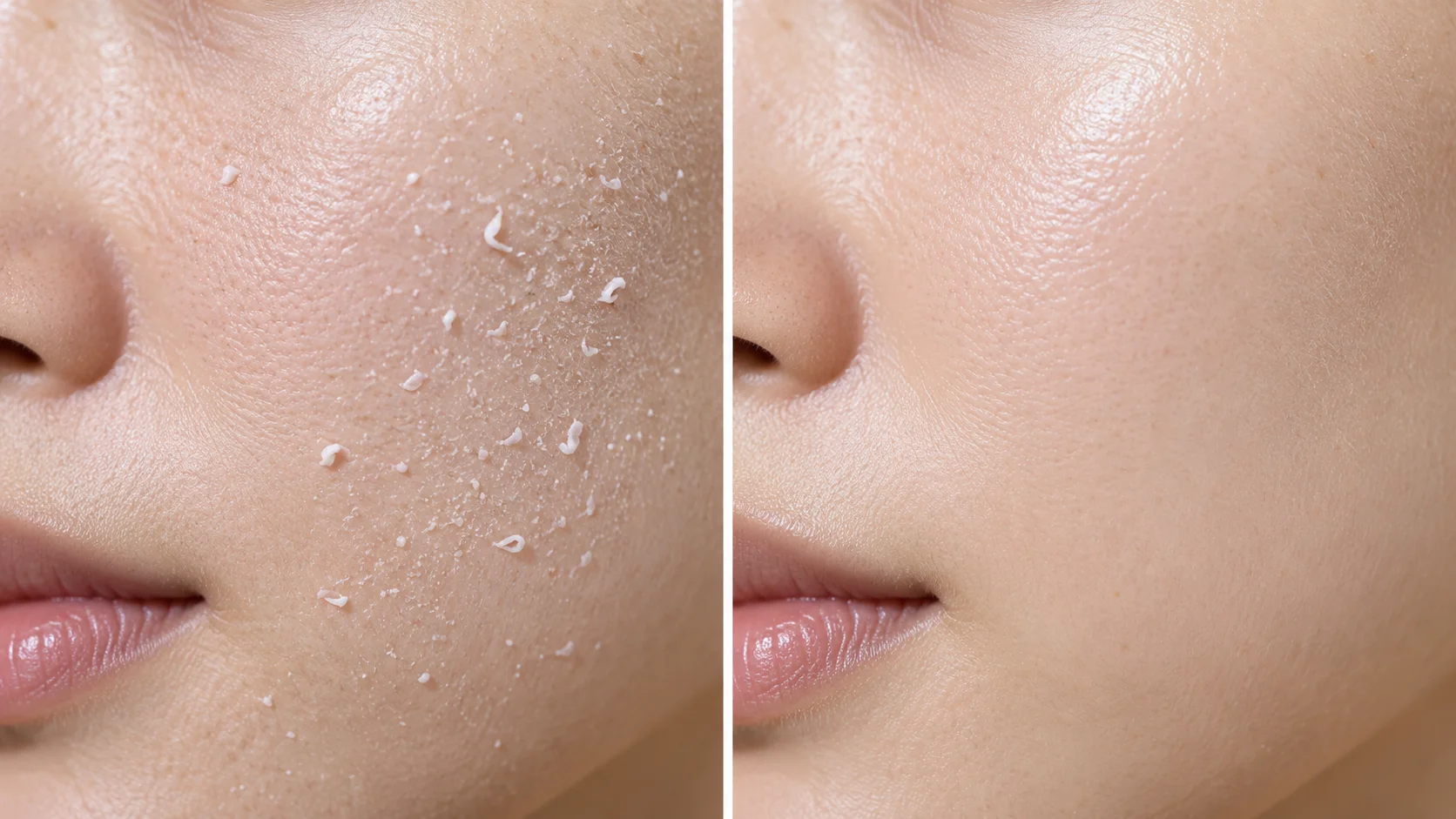
Pilling is what happens when a product — or the combination of two products — forms small rolled-up balls, flakes, or rubbery fragments on the skin surface instead of absorbing smoothly. It is the same phenomenon that happens to a sweater when fibres bunch together, except it happens with skincare because incompatible formula systems are pushing each other off the skin rather than absorbing together.
At a formulation level, pilling happens because of how different product bases interact. Skincare products use different types of polymers, thickeners, silicones, and emulsifiers to create their textures. When two products with incompatible bases come into contact — particularly when one has not fully absorbed before the other is applied — the surface tension between the formulas causes the less-absorbed product to roll off rather than integrate.
Sunscreen is particularly prone to being the victim of this because it is usually the last skincare layer before makeup. It sits on top of moisturiser, primer, or a serum that may not have fully set, and then it has makeup applied on top of it with a brush or sponge. Each layer introduces another opportunity for formula conflict or mechanical disruption before the SPF has had time to settle.
Why Is My Sunscreen Always Pilling?
Persistent pilling almost always comes down to one or more of these specific causes. Identifying which ones apply to your routine is the fastest route to fixing it.
Not waiting long enough between layers. Every skincare product needs absorption time before the next one is applied. Applying sunscreen directly over a moisturiser that is still wet, or applying foundation directly over freshly applied SPF, gives neither product time to set into the skin. They sit on top of each other in a semi-wet state and the mechanical action of the next application physically dislodges the previous layer.
Incompatible formula bases. Silicone-based products and water-based products do not play nicely in direct contact. A silicone-heavy primer applied directly under a water-based SPF creates a surface that the SPF cannot penetrate. The SPF sits on top of the silicone film and rolls off when touched. The reverse is also true — a silicone-heavy SPF applied over a water-based moisturiser behaves similarly.
Rubbing the application. Buffing or rubbing foundation or primer into the skin when SPF is sitting on the surface rolls the SPF product between the skin and whatever is being rubbed. That mechanical rolling action is what creates the visible pills.
Too many product layers applied too close together. A serum, then a moisturiser, then a primer, then an SPF, then a foundation — each applied with minimal waiting time between them — creates a multi-layer stack of products in different states of absorption. The whole stack is unstable and pilling becomes almost inevitable.
The SPF formula itself has a polymer-heavy or film-forming base. Some sunscreens — particularly those with complex multi-filter systems or certain gel-based Korean SPF formulas — use film-forming polymers in their base that are prone to interacting poorly with the polymers in foundations and primers. This is formula-dependent and varies by skin type and the specific makeup products being used.
Over-applying. A thick layer of SPF is more prone to pilling than a thin, even one. More product on the skin means more unabsorbed material available to ball up.
How to Prevent Sunscreen Pilling Under Makeup
These steps address every cause of pilling systematically. Work through all of them rather than just the one that seems most likely — pilling is often multi-causal.
Wait between every layer. Thirty seconds minimum between each product. After moisturiser, wait. After SPF, wait a full 60 seconds or until the formula feels fully settled before going near it with a sponge or brush. This single habit resolves pilling in most routines where products are otherwise compatible.
Pat — never rub. Every product application from serum to foundation should use a pressing and patting motion rather than rubbing or buffing. Use a damp makeup sponge pressed lightly against the skin to apply foundation rather than a brush buffed in circular motions. Pressing does not disturb the SPF layer below. Rubbing and buffing rolls it off.
Use the minimum effective amount of SPF. The two-finger rule for the face gives the correct amount (approximately one teaspoon for face and neck). Applying more than this does not increase protection and does increase the chance of the excess formula pilling when makeup contacts it.
Check formula compatibility before committing to a pairing. If your moisturiser is silicone-heavy (check for dimethicone in the first half of the ingredients list), use a silicone-compatible SPF rather than a water-based gel SPF over it. Or swap the moisturiser for a water-based one to match a water-based SPF.
Skip the separate primer step when possible. If your SPF already has a smooth, even finish on the skin, adding a separate primer before foundation introduces another potential incompatibility point. A well-formulated SPF in a skin-tint or matte finish can replace both SPF and primer in one step.
Apply SPF to slightly damp — not wet — skin. A very light mist of water or application right after patting the face dry from moisturiser (while still slightly damp) helps SPF spread more thinly and evenly, leaving less excess formula on the surface to pill.
The Correct Order for Layering Sunscreen Under Makeup Without Pilling
Order matters as much as the formula choices. Here is the sequence that minimises every pilling risk:
- Cleanser — clean, dry skin is the best base for any layer
- Toner or essence — if used, wait 30 seconds for full absorption
- Serum — the thinnest active product, applied and fully absorbed before anything else
- Eye cream — tapped around the eye area and allowed to settle
- Moisturiser — applied and allowed to absorb for a full 60 seconds, or until the skin surface feels no longer tacky
- Sunscreen — the final skincare layer, applied in the two-finger amount using light patting motions
- Wait one to two minutes — this is the most skipped step and the most important one. The SPF needs to settle before makeup touches it.
- Makeup application — use a damp sponge in pressing motions, not a dry brush in buffing motions
The gap between SPF and makeup (step 7) is where most pilling routines go wrong. That one to two minutes is not optional. It is what separates an SPF that pills immediately from one that stays in place all day.
How to Avoid White Cast from Sunscreen Under Makeup
White cast and pilling are separate problems with separate causes — but both are common complaints about wearing SPF under makeup in Pakistan.
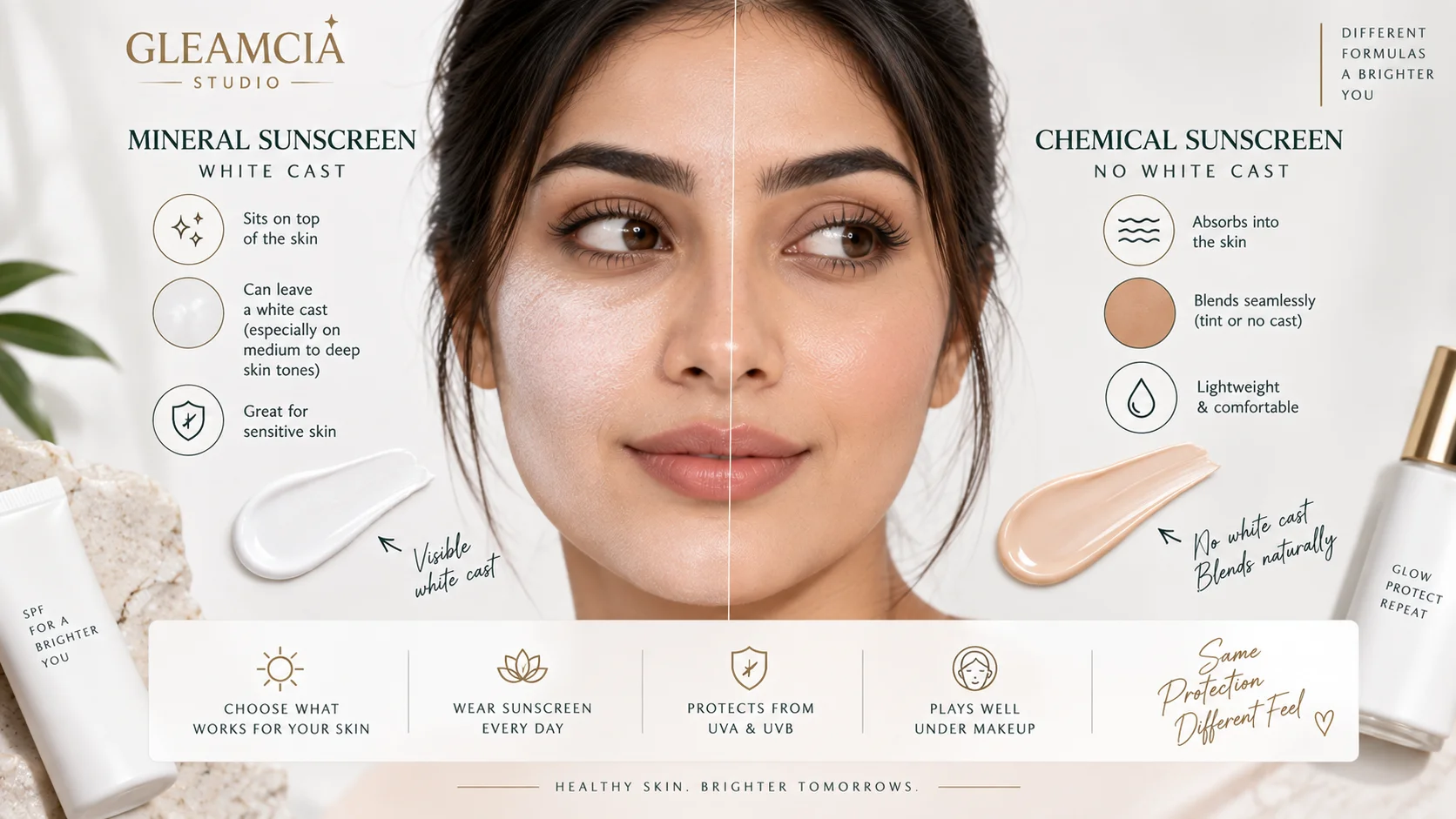
White cast comes from mineral UV filters: zinc oxide and titanium dioxide. These are white powders that physically deflect UV radiation. At higher concentrations, they leave a visible white or grey tint on the skin — which shows clearly on medium to deep skin tones, particularly common across South Asian skin types in Pakistan.
Chemical UV filters (avobenzone, octinoxate, Tinosorb S, Uvinul A Plus) are colourless liquids that absorb into the skin and convert UV to heat. They do not produce any white cast.
Solutions for white cast:
Switching to a chemical sunscreen eliminates white cast entirely because there is no white powder present in the formula.
Tinted mineral SPF formulas use a skin-tone pigment added to the mineral base that cancels out the white cast. These work well for a single skin tone match but are limited in shade range.
Micro-encapsulated zinc oxide formulas have the zinc oxide particles reduced to a size that produces less visible white cast while retaining UV filtration. These are found in higher-formulation mineral SPFs and sit noticeably better on medium to dark skin tones.
Applying a very thin layer of mineral SPF — using the correct two-finger amount rather than more — and pressing it in thoroughly reduces the visible white cast significantly compared to a thick, rubbed-in layer.
Setting powder or tinted foundation applied over a settled mineral SPF neutralises the remaining white cast effectively. This is the most practical workaround when using a mineral SPF that produces mild cast on your skin tone.
Is Sunscreen Still Effective If It Pills?
No. Pilling means the formula is physically coming off the skin rather than staying on it and forming the protective layer it needs to filter UV radiation.
Sunscreen effectiveness depends on a consistent, even film of product covering the full skin surface at the concentration the formula was designed for (2mg per cm²). Pilling creates three problems simultaneously. First, the active UV filters are being removed from the skin in the pills rather than staying on it. Second, pilling is always uneven — some areas pill more than others, leaving gaps in coverage. Third, the mechanical action that causes pilling (rubbing, sponge buffing) further reduces the concentration of active ingredient remaining on any given area.
The American Academy of Dermatology recommends reapplying SPF every two hours during sun exposure. A pilled SPF that has been partially rubbed off during makeup application is not even starting from a full application — it is starting from a significantly compromised one. Protection in those areas is substantially lower than the label SPF rating suggests.
If SPF has clearly pilled during makeup application, removing the makeup and restarting the SPF application is the correct response — not pressing on with the hope that the remaining formula provides adequate coverage.
What Sunscreen Formula Does Not Cause Pilling?
Certain formula characteristics make some SPF products significantly less prone to pilling than others. Here is what to look for on the label and in the texture when choosing:
Chemical sunscreens as a category tend to pill less under makeup than mineral formulas. Chemical UV filters are absorbed into the skin’s outer layers rather than sitting on the surface as mineral UV filters do. An absorbed product has nothing on the surface to ball up.
Water-based or gel SPF formulas absorb faster and more completely than cream-based formulas, leaving less surface excess to pill when makeup is applied on top.
Sunscreen with a matte or skin-finish rather than a dewy or glossy finish tends to interact better with foundation. The matte finish indicates a formula designed to provide a stable base — which is exactly what it needs to be under makeup.
Formulas marketed as makeup primers or SPF-primer hybrids are specifically designed to be layered under makeup and formulated with that compatibility in mind. These are the most reliably non-pilling SPF option for daily makeup wearers.
Tinted SPF reduces pilling risk by consolidating the SPF and first makeup layer into one product, eliminating the formula incompatibility point between them entirely.
Thin, lightweight serums or essences with SPF sit more flush with the skin and leave less surface product to be disturbed during makeup application than thick SPF creams.
Why Korean and Some Asian Sunscreens Pill on Certain Skin Types
A number of widely-discussed Asian sunscreen formulas — particularly those with complex multi-filter systems, high-slip textures, or gel-based bases — are known to pill on specific skin types, particularly under certain makeup products. Understanding why explains the mechanism broadly.
Asian sunscreen formulations, especially those working within specific UV filter regulations, often use a more complex polymer and film-former system to achieve the texture and skin-feel they are known for. These film-forming polymers can conflict with the film-forming polymers found in silicone-heavy primers, foundations, or even other SPF products. When two film-forming systems come into contact before either has fully dried, they compete and the result is pilling.
The fix is almost always the same regardless of the specific formula: allow longer absorption time before makeup, switch to a patting application method rather than rubbing, or try a different foundation format (a water-based foundation often layers better over a Korean-style SPF than a silicone-heavy full-coverage foundation does).
This is a formula and application technique issue, not an indication that the SPF is a poor product. The same sunscreen that pills for one person with a specific primer and foundation combination may apply perfectly for someone using a different routine.
Mineral Sunscreen vs Chemical Sunscreen Under Makeup
| Feature | Mineral (Zinc Oxide / Titanium Dioxide) | Chemical (Avobenzone / Tinosorb etc) |
| White cast risk | High on medium to dark skin tones | None — UV filters are colourless |
| Pilling risk under makeup | Moderate to higher — sits on skin surface | Lower — absorbed into skin |
| Works immediately on application | Yes | Wait 10 to 15 minutes to activate |
| Best for sensitive skin | Yes — physical barrier, less sensitising | Moderate — some chemical filters sensitise |
| Under makeup compatibility | Better with tinted formulas and patting | Generally better for under-makeup use |
| Reapplication ease | Good | Good |
| Skin feel | Can feel heavier or chalky | Lighter, often no residual feel |
| Broad-spectrum coverage | Yes with zinc oxide (UVA+UVB) | Depends on filters used — check label |
| Better for South Asian skin tones | Tinted mineral or chemical preferred | Yes — no white cast issue |
| Pakistan climate suitability | Good in cooler months | Excellent year-round |
For everyday makeup wearers in Pakistan with medium to deep skin tones, a chemical sunscreen or a tinted mineral formula is the more practical under-makeup choice. Mineral SPF is excellent for its barrier properties but requires a tinted version to work seamlessly under makeup on South Asian complexions.
How to Reapply Sunscreen Over Makeup During the Day
Getting SPF on in the morning correctly is only part of the challenge. Reapplication every two hours of outdoor exposure is what keeps protection intact — and that requires doing it over makeup.
SPF mist or spray is the most wearable reapplication method over makeup. Hold the bottle at arm’s length and mist evenly across the face. Allow it to settle without touching, or gently press with clean fingertips. It does not disturb the makeup below when applied correctly and provides a reasonable top-up of UV coverage.
SPF powder is a second option — a loose or pressed powder that contains UV filters applied over the makeup with a brush. It refreshes both SPF coverage and reduces midday shine, making it particularly useful in Pakistan’s heat.
SPF cushion foundation blends SPF and foundation in a format designed for reapplication, making it one of the most practical daily options for active reapplication.
The practical reality is that none of these reapplication methods deliver the exact coverage of the original well-applied SPF layer. But they maintain meaningful UV protection throughout the day — which is the goal. Not reapplying at all is significantly worse than reapplying imperfectly.
Common Mistakes When Layering Sunscreen Under Makeup
Applying makeup immediately after SPF. The most common cause of pilling. Wait a minimum of one to two minutes after applying SPF before touching the skin with anything.
Using a silicone-heavy primer over a water-based SPF or vice versa. These formula types conflict. Either match bases (water to water, silicone to silicone) or skip the separate primer and let a well-formulated SPF act as the makeup base directly.
Buffing foundation into the skin with a dry brush. Buffing motions on an SPF layer that is still settling mechanically rolls product off the skin. Switch to a damp sponge applied with pressing motions.
Applying SPF with rubbing motions. Patting SPF into the skin rather than rubbing it across leaves a more even, thinner layer that absorbs faster and provides less surface product to pill.
Choosing an SPF based on brand or fragrance rather than formula compatibility with your makeup routine. The SPF that works under makeup is the one whose base is compatible with your foundation’s base — not necessarily the most heavily marketed one.
Reapplying a full layer of cream SPF directly over makeup. The cream SPF layer adds too much product over an existing makeup layer, creating the same pilling conditions as the initial application. Use SPF mist, powder, or cushion for reapplication.
What to Expect When You Fix the Pilling Problem
Getting SPF layering right is not a visible result in the way that a serum result is — but what it changes about your skin over time is significant.
Skin protected consistently with a properly applied, non-pilling SPF accumulates less UV damage. That means less hyperpigmentation, less collagen breakdown, and a slower rate of the dark spots and tone unevenness that are among the most treated skin concerns in Pakistan.
Immediately: makeup applies more evenly and stays in place longer when it is sitting over a properly absorbed SPF rather than pilled or uneven SPF beneath.
Over weeks: the SPF is actually doing its job instead of partially pilling off. The brightening and treatment serums in the rest of the routine work more effectively when UV damage is genuinely being controlled rather than accumulating through gaps in SPF coverage.
Aftercare and Daily Habits for SPF Under Makeup
Do:
- Set a two-hour outdoor reminder for SPF reapplication — Pakistan’s sun intensity makes this genuinely necessary
- Apply SPF as the last skincare step, not before moisturiser or serum
- Use a damp makeup sponge to apply foundation rather than a dry buffing brush when wearing SPF underneath
- Keep a travel SPF mist in a bag for midday reapplication that does not require removing makeup
Do not:
- Apply SPF over a silicone-heavy primer if using a water-based SPF — this is formula incompatibility waiting to produce pilling
- Skip SPF on overcast days or short outdoor trips — UV exposure accumulates across all of them
- Use the same SPF in the evening that you use in the morning — SPF at night provides no benefit and some formulas are not designed for overnight use
What Does a Good Sunscreen for Under Makeup Cost in Pakistan?
Sunscreen formula quality determines price directly. A chemical SPF 50 with broad-spectrum UVA and UVB coverage, a lightweight gel base designed to sit under makeup without pilling, and proper stability testing to ensure the UV filter concentration holds through Pakistan’s temperatures costs more to produce than a basic SPF lotion with a single UV filter.
Texture innovation — formulas that genuinely work under makeup without disrupting it — is expensive to achieve. The manufacturing process for a matte-finish, non-pilling, non-white-cast SPF is more complex than a standard SPF cream. That complexity is reflected in the price, and it is worth paying for a product used daily.
Size matters significantly for a product applied in generous amounts twice a day. A 50ml SPF used at the correct two-finger amount for face and neck lasts approximately 30 days. Larger formats or two-for-one purchasing reduce the daily cost meaningfully. Bundles pairing SPF with a matching moisturiser or serum from the same range ensure formula compatibility and are more economical per product.
Gleamcia ships from Karachi to every city in Pakistan. Visit gleamcia.com/shop for current SPF and skincare pricing.
Why Choose Gleamcia
Gleamcia SPF formulas are developed to do what most people actually need from a sunscreen — sit cleanly on the skin, work under makeup without pilling, and provide genuine broad-spectrum coverage that holds in Pakistan’s heat and humidity.
- Chemical and mineral SPF options formulated to avoid white cast on South Asian skin tones
- Lightweight, gel-based textures designed specifically for under-makeup wear in warm climates
- No silicone-heavy bases that create formula incompatibility with most foundations and primers
- Active ingredients combined with UV protection so the SPF step also supports treatment
- Full ingredient transparency so you can confirm formula compatibility with your existing makeup before ordering
- Nationwide delivery from Karachi across Pakistan, reliable packaging that protects formula stability in transit
Frequently Asked Questions
1. How can I prevent my sunscreen from pilling under makeup? Wait a full one to two minutes after applying SPF before touching it with any makeup tool. Apply foundation using a damp sponge in pressing motions rather than a brush in buffing motions. Use the minimum effective amount of SPF — the two-finger rule for face and neck — so there is less surface product to be disturbed. Check that your moisturiser and SPF use compatible bases (both water-based, or both silicone-compatible), and consider skipping a separate primer step if formula incompatibility between your primer and SPF is the likely cause.
2. Why is my sunscreen always pilling? Persistent pilling usually comes from one of four causes: not waiting long enough between product layers before applying makeup, using a silicone-heavy product under a water-based SPF or vice versa, applying makeup with rubbing or buffing motions that roll the SPF off the skin, or using too much SPF so the excess on the surface pills when foundation contacts it. Most pilling routines are solved by adding a one to two minute wait after SPF and switching to a patting sponge for foundation.
3. Is sunscreen still effective if it pills? No. Pilling means the SPF formula is physically leaving the skin rather than staying on it as a protective film. The active UV filters are coming off in the pills, coverage becomes uneven, and the concentration of product remaining on the skin is well below what the SPF rating requires. A pilled SPF provides significantly less protection than the label claims. If SPF has clearly pilled during application, the correct response is to remove the makeup and start the SPF application again.
4. What sunscreen formula doesn’t cause pilling? Chemical sunscreens (avobenzone, Tinosorb, Uvinul-based formulas) are absorbed into the skin’s outer layers rather than sitting on the surface, making them significantly less prone to pilling under makeup than mineral formulas. Water-based or gel-texture SPF formulas absorb faster and leave less surface product to be disturbed. SPF-primer hybrid formulas and tinted SPF products are specifically designed for under-makeup use and are among the most reliably non-pilling options for daily wear.
5. Why do some popular Korean and Asian sunscreens pill on certain skin types? Many Asian sunscreen formulas use complex polymer and film-forming systems to achieve their characteristic skin-feel and texture. These film-forming polymers can conflict with the film-forming polymers in foundations, primers, and even other skincare layers — particularly silicone-heavy makeup products. The result is pilling when two incompatible film-forming systems come into contact before either has fully dried. The fix is longer absorption time, switching to patting application technique, or pairing the SPF with a water-based foundation rather than a silicone-heavy one. This is a formula and technique compatibility issue, not a sign that the SPF itself is a poor product.
6. Should I apply sunscreen before or after primer? SPF goes before primer when both are used. The sequence is: moisturiser, SPF (fully absorbed), then primer, then foundation. However, using a separate primer on top of an absorbed SPF introduces another potential formula compatibility layer. For most daily routines, replacing the separate primer with a well-formulated SPF that has a smooth, even finish after absorption achieves the same base-prep result without the extra layer risk.
7. How do I reapply sunscreen over makeup during the day? Use an SPF mist held at arm’s length and sprayed evenly across the face, allowed to settle without rubbing. SPF powder with UV filters applied with a brush is a second option that refreshes coverage while controlling midday shine. SPF cushion foundations that combine SPF and coverage in one product are the most practical full-coverage reapplication format. None of these methods replicate the complete coverage of the original morning application, but they maintain meaningful UV protection throughout the day without disturbing the makeup below.
Stop Letting SPF Pill Off and Start Letting It Actually Protect You
SPF that pills is SPF that is not working. Getting the layering technique right — the wait time, the patting motion, the formula compatibility — is what finally makes the morning SPF step do the job it is supposed to do, all day, under whatever makeup you wear. Order from the Gleamcia Skin Care range available at gleamcia.com, with nationwide delivery to every city in Pakistan from Karachi.
Order via WhatsApp at 0336 1223363 for personalised SPF recommendations based on your skin type and makeup routine.