Introduction
Winter in Pakistan does not hit the same way everywhere. Lahore and Islamabad drop into real cold, with dry air that strips moisture fast. Karachi stays mild but the air quality and wind still pull hydration from the skin. Whatever city you are in, your summer skincare routine will stop working somewhere between October and January — and if you have not updated it yet, your skin is probably already telling you.
A winter skincare routine is not a complete overhaul. It is a series of targeted swaps: the right face wash, a richer moisturizer, and the right serum combination for the season. Get those right and your skin stays balanced, not dry, not dull, not suddenly reactive to products that worked fine four months ago.
This guide walks through exactly what needs to change, what stays, and what ingredients to prioritise when temperatures drop. Browse the Gleamcia Skin Care range for serums, moisturizers, and face washes suited to winter skin concerns.
Why Your Skin Changes in Winter
Before changing your routine, it helps to understand what winter actually does to the skin.
When temperatures fall, the air holds less moisture. Both indoor heating and outdoor cold air reduce ambient humidity, which means the skin’s surface loses water faster through a process called transepidermal water loss. When the skin cannot retain enough moisture, the barrier — a thin protective layer made of lipids and proteins — weakens. A compromised barrier is more permeable, more reactive, and more prone to redness, tightness, and flaking.
In Pakistan’s northern cities, this shift is particularly pronounced in December and January. In Karachi, the temperature drop is smaller but the dry winds and indoor fans running year-round create similar moisture-depleting conditions.
The other factor is reduced sun intensity. Many people assume winter means less need for SPF, which is a mistake — UV rays are present year-round — but the seasonal shift does affect which actives are easier to tolerate. Some ingredients that require sun caution, like certain exfoliating acids, become safer to use more consistently during winter months.
What Is a Good Skincare Routine for Winter?
A good winter skincare routine keeps the skin’s moisture barrier intact while delivering the active ingredients that support radiance, repair, and protection. The order matters as much as the products.
Morning winter skincare routine:
- Gentle, non-stripping face wash — Cream or milk cleansers work better than gel or foaming washes in winter. They remove impurities without removing the oils your skin needs more of in the cold.
- Hydrating toner or essence — Optional but effective. A toner with hyaluronic acid or glycerine preps the skin to absorb the next step better.
- Vitamin C serum — Winter is actually ideal for vitamin C use. The lower UV intensity reduces the risk of oxidation, and Vitamin C’s brightening effect helps counteract the dullness that cold air causes. Apply after toner, before moisturizer.
- Moisturizer — Switch to a richer formulation. Lightweight gels that worked in July are often not enough in December. Look for hyaluronic acid, ceramides, and niacinamide in the formula.
- Sunscreen (SPF 30 minimum) — The final step every morning, regardless of season. UV is present in winter, and neglecting SPF in winter months is one of the most common reasons brightening results stall.
Evening winter skincare routine:
- Face wash — Same gentle cleanser as morning, or a slightly more nourishing oil-cleanser if you are wearing makeup.
- Serum (actives) — Niacinamide, peptides, or a hydrating serum goes on clean skin before moisturizer at night.
- Night moisturizer or face cream — Slightly richer than your day moisturizer. This is when barrier repair happens, so giving the skin more lipid support overnight pays off.
- Eye cream if needed — The skin around the eyes is thinner and loses moisture faster in winter.
Explore the full Gleamcia Skin Care range to find a moisturizer, serum, and cleanser combination that suits your skin type in winter.
What to Swap: Face Wash Edition
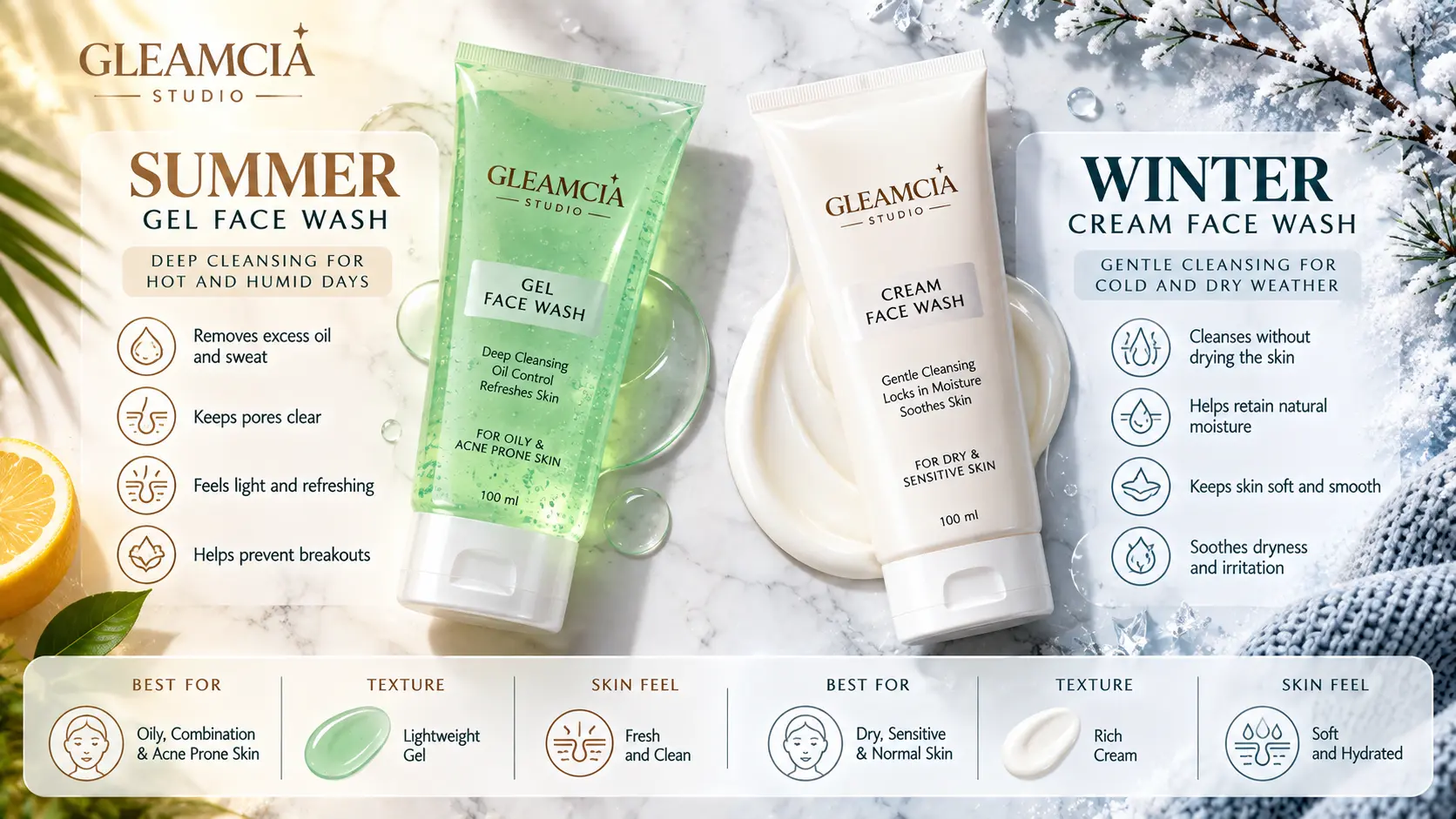
This is where most people go wrong first. They keep using the same foaming or gel face wash from summer — one designed to cut through excess oil and sweat — when the skin no longer needs that kind of aggressive cleansing.
Summer face wash: Gel, foam, or salicylic acid-based. Built for sebum control, sweat removal, and deep pore cleansing in heat and humidity.
Winter face wash swap: Cream, milk, or low-foam formulation. The goal is to cleanse without stripping. If your face feels tight, squeaky, or slightly stinging after washing, that is a sign your cleanser is too harsh for the season.
Skin types that can keep a gentle foaming wash in winter: oily skin types in warmer climates like Karachi who do not experience significant seasonal dryness. Even then, the foam formula should be sulphate-free.
Skin types that must swap to a cream cleanser: dry skin, combination skin in cooler climates, sensitive skin, and anyone already experiencing winter flakiness or redness.
What to Swap: Moisturizer Edition
The second most impactful winter swap is your moisturizer. Gel moisturizers and water-based formulas — perfect for humid summer months — do not provide the occlusive barrier support skin needs in dry, cold air.
What to look for in a winter moisturizer:
- Hyaluronic acid — Draws moisture into the skin from deeper layers. Works best paired with an occlusive ingredient that traps it there.
- Ceramides — Lipid molecules that support the skin barrier. Particularly useful if winter causes any redness, flakiness, or sensitivity.
- Glycerine — A humectant that keeps water in the skin’s surface layer. Present in many moisturizers but often at low concentrations — look for it higher on the ingredient list.
- Niacinamide — Improves barrier function, reduces redness, and supports evening skin tone. Works well in a winter moisturizer because there is less UV risk from photosensitivity.
- Shea butter or squalane — Richer occlusive and emollient ingredients suited for dry skin types that need more than a water-based cream can offer.
For combination skin in Pakistan’s winter: a medium-weight lotion with ceramides and hyaluronic acid balances the dry patches without overloading the T-zone.
For dry skin in cold climates: a richer cream formula with shea or squalane is appropriate, particularly at night.
For oily skin: a gel-cream hybrid that adds hydration without shine is the right middle ground.
Summer Moisturizer vs Winter Moisturizer: What Needs to Change
| Feature | Summer Moisturizer | Winter Moisturizer |
| Texture | Lightweight gel or water-gel | Cream or lotion, medium to rich |
| Occlusive strength | Low — lets skin breathe in heat | Higher — locks in moisture against cold and dry air |
| Oil content | Minimal | Moderate to higher depending on skin type |
| Absorption speed | Fast — ideal for sweaty conditions | Slightly slower — more emollient ingredients |
| Best for | Humid, oily, summer skin | Dry, tight, winter skin |
| Layering under SPF | Easy — fast absorption | Requires a lighter base in morning routine |
| Night use | Optional | Essential — barrier repair happens overnight |
| Ideal skin types | All types in heat | Dry to normal; lighter weight for oily types |
The gap between summer and winter moisturizer needs is larger for people in Lahore, Islamabad, and Peshawar than for those in Karachi. Adjust based on how your skin actually responds, not just the calendar.
Can I Use Vitamin C Serum in Winter?
Yes, and in many ways winter is the better season for it.
Vitamin C serum is a potent antioxidant that brightens skin, fades dark spots, and supports collagen production. One of the reasons people hesitate to use it is the concern around sun exposure — Vitamin C can oxidise when exposed to UV and, in rare cases, cause photosensitivity if the formula degrades. In summer, when UV exposure is high, using Vitamin C correctly (in the morning under SPF) requires more diligence.
In winter, UV intensity is lower, which means less oxidation risk, and the pairing of Vitamin C with SPF is still correct but slightly more forgiving. For this reason, winter is an ideal time to start a Vitamin C serum if you have not already, or to use it more consistently if you were irregular in summer.
The right way to use Vitamin C in winter:
- Apply to clean, dry skin in the morning
- Allow 1 to 2 minutes to absorb before layering moisturizer
- Always follow with SPF — even in winter, even indoors if near a window
- Start with a lower concentration (10%) if your skin is sensitive and increase to 15–20% as it adjusts
Look for stable Vitamin C forms like ascorbic acid, sodium ascorbyl phosphate, or ascorbyl glucoside. Unstable formulas that turn orange or brown in the bottle have already oxidised and will not deliver results.
Why Avoid Vitamin C at Night?
The reason is practical, not safety-related. Vitamin C works as an antioxidant — it neutralises free radicals generated by UV exposure and environmental pollution. That process is active protection, and it makes the most sense when applied before you face those triggers.
At night, there is no UV exposure, so Vitamin C is not doing the job it is best suited for. Additionally, Vitamin C can interfere with certain nighttime actives. If you use niacinamide and Vitamin C together, older formulations of niacinamide were sometimes noted to interact with ascorbic acid — though research on this has evolved and well-formulated products tend to buffer this issue. If you are using retinol at night, Vitamin C does not pair well in the same layer.
For practical purposes: Vitamin C is a morning active. At night, your skin benefits more from repair-focused ingredients — niacinamide, peptides, or a rich moisturizer. Keeping Vitamin C in the AM routine also ensures it has a chance to absorb before you apply SPF, which reinforces its protective benefit.
Which Serum Is Best for Winters?
The best serum for winter depends on your primary concern, but a few work exceptionally well in the cold season:
For dull, uneven skin tone: Vitamin C serum in the morning. Brightens existing dullness, fades dark spots accumulated from summer sun, and supports a more radiant complexion over several weeks of consistent use.
For dehydrated, tight skin: Hyaluronic acid serum. Particularly useful if your skin feels dry regardless of how much moisturizer you apply — hyaluronic acid works at a deeper level to retain water within the skin itself. Apply to slightly damp skin before moisturizer for best absorption.
For redness, sensitivity, and barrier repair: Niacinamide serum. Improves the skin barrier, reduces inflammation, and supports the skin’s ability to hold moisture. Works well in both morning and evening routines and pairs easily with other actives.
For anti-ageing and firmness: Peptide serum at night. Winter is a good season for peptides because they work best without UV interference and are not photosensitising.
For combination concerns in one product: A serum combining niacinamide and hyaluronic acid covers hydration, barrier support, and brightness in one step — useful if you want a simplified winter routine without layering multiple serums.
Browse the Gleamcia Skin Care range for serums suited to these winter concerns, available with nationwide delivery across Pakistan.
How to Get Glowing Skin in Winter in 7 Days
Seven days will not undo months of neglect, but they can produce a visible improvement in how your skin looks and feels — especially if the issue is primarily dehydration and dullness, which winter directly causes.
Day 1 to 2: Swap your face wash to a cream or low-foam cleanser. Immediately reduces the stripping that has been drying your skin with every wash. Most people notice their skin feeling less tight within the first two days of this switch.
Day 2: Add Vitamin C serum to your morning routine. Antioxidant protection starts from the first application even if visible brightening takes longer.
Day 3: Switch or upgrade your moisturizer to a formula with ceramides and hyaluronic acid. Give it a full application morning and night.
Day 4: Add a hyaluronic acid serum under your moisturizer at night. The extra hydration layer makes a noticeable difference in how rested and plumped the skin looks by morning.
Day 5 to 6: Apply SPF without fail every morning, even if you are staying indoors. UV through windows contributes to dullness. This step does not add glow but prevents it from being eroded.
Day 7: Assess. If your skin already looks more hydrated and less dull, the routine is working and you continue. If specific concerns like dark spots or texture remain, a consistent serum routine over 4 to 6 weeks is what addresses those.
According to the American Academy of Dermatology, a healthy skin barrier is the foundation of any good skincare result. Most visible improvements in winter dullness come from restoring the barrier first.
Aftercare Tips for a Winter Skincare Routine
Do:
- Apply moisturizer within 60 seconds of washing your face. This is when the skin retains moisture most effectively.
- Drink adequate water. Topical hydration helps but internal hydration cannot be replaced.
- Use SPF even in winter, even when the sun is not visible.
- Keep your routine consistent. Switching products frequently in winter prevents your skin from adapting to any single active.
- Exfoliate once a week maximum — winter skin is already more vulnerable, and over-exfoliation makes everything worse.
Do not:
- Use hot water to wash your face in winter. It feels good in the cold but strips oils more aggressively than warm water.
- Layer too many new actives at once. Winter is a good time to start new actives but introduce one at a time.
- Skip moisturizer because you feel oily. In winter, oiliness can be a sign of dehydration — the skin overproduces oil when the water content is low.
- Neglect the neck and under-eye area. These lose moisture faster than the face and show winter dryness first.
What Does a Winter Skincare Routine Cost in Pakistan?
Building a winter routine involves a few key product swaps and understanding what drives pricing helps you invest in the right places.
A cream face wash is often priced comparably to a gel cleanser but formulated with more skin-friendly ingredients. The cost difference between a stripping formula and a gentle one tends to be small — and the benefit to your skin in winter is significant.
Moisturizer is where the biggest quality difference shows up in price. A richer formula with meaningful concentrations of ceramides, hyaluronic acid, and niacinamide costs more than a basic lotion. That is where it is worth spending, because a good moisturizer protects every other product you apply beneath it.
Serums vary by active ingredient. Vitamin C formulas that use stable, high-concentration ascorbic acid are priced higher than those using cheaper Vitamin C derivatives. For results, formulation matters more than the price point.
Buying a complete winter skincare bundle from the same range often reduces per-product cost compared to purchasing each item separately. It also means the formulations are designed to work together without ingredient conflicts.
Visit gleamcia.com for current pricing, seasonal bundles, and nationwide delivery options across Pakistan.
Why Choose Gleamcia
Gleamcia’s skincare range is built around ingredients that actually work — not labels that promise and under-deliver.
- Every formula uses active, evidence-backed ingredients at concentrations that drive visible results, not just label claims
- Products are tested for safety and formulation stability before reaching customers
- The range covers core winter skin concerns: hydration, brightening, barrier repair, and daily SPF protection
- Full ingredient transparency so you know exactly what you are applying to your skin
- Nationwide delivery across Pakistan — from Karachi to Lahore, Islamabad to Quetta
- Available online and via WhatsApp at 0336 1223363 for personalised product advice
When the season changes, your skin’s needs shift. Gleamcia’s formulations are built to meet those needs consistently.
Frequently Asked Questions
1. What is a good skincare routine for winter? A good winter skincare routine starts with a gentle cream or low-foam face wash, followed by a Vitamin C serum in the morning, a richer moisturizer with ceramides and hyaluronic acid, and SPF 30 or above. At night, replace the Vitamin C with niacinamide or a hydrating serum, and use a slightly richer moisturizer to support overnight barrier repair. The key change from summer is shifting from lightweight, oil-controlling formulas to richer, barrier-supporting ones. Browse the Gleamcia Skin Care range for winter-suitable options.
2. How to get glowing skin in 7 days in winter? Start by switching to a gentle face wash and a richer moisturizer — these two changes address the dehydration that causes winter dullness fastest. Add a Vitamin C serum in the morning and a hyaluronic acid serum at night from day two. Apply SPF without fail every morning, and drink enough water throughout the day. Most people see a noticeable improvement in texture and hydration within the first week. Deeper results like fading dark spots take 4 to 6 weeks of consistent use.
3. Can I use vitamin C serum in winter? Yes, and winter is actually a great time to use Vitamin C serum consistently. Lower UV intensity means less oxidation risk, making morning application easier to manage. Vitamin C supports brightening, fades dark spots from summer sun, and provides antioxidant protection. Apply it to clean, dry skin in the morning before moisturizer, and always follow with SPF. Start at 10% concentration if your skin is new to it.
4. Why avoid vitamin C at night? Vitamin C is an antioxidant that works by neutralising free radicals caused by UV exposure and pollution. At night, there is no UV exposure, so the active is not being used for its primary purpose. Vitamin C can also interact with nighttime actives like retinol or certain niacinamide formulas in the same layer. Morning use gives Vitamin C the UV environment it is designed to work in, and applying it before SPF creates a layered protective effect that works throughout the day.
5. Which serum is best for winters? The best winter serum depends on your skin concern. For dullness and uneven tone, a Vitamin C serum in the morning. For dehydration and tightness, a hyaluronic acid serum applied under moisturizer. For sensitivity, redness, and barrier repair, a niacinamide serum works in both AM and PM routines. A combination serum with hyaluronic acid and niacinamide together covers multiple winter concerns in one step, which suits people who prefer a simplified routine.
6. What face wash is best for winter in Pakistan? A cream or low-foam, sulphate-free face wash is the right choice for winter across most skin types in Pakistan. Gel and foam cleansers designed for oil control strip more moisture than skin can afford in the cold, dry months. If you have oily skin in Karachi where winters are milder, a gentle foaming sulphate-free wash is still preferable to anything with aggressive surfactants. The face wash should leave your skin feeling clean and soft, never tight.
7. Do I need to change my SPF in winter? You do not need to increase or decrease SPF potency in winter, but you do need to keep applying it. SPF 30 to 50 every morning is correct year-round. What does change is how SPF sits on winter skin. A matte SPF that worked in summer can feel drying in winter — switch to a hydrating or dewy SPF formula that layers better over a richer moisturizer.
8. How often should I exfoliate in winter? Once a week is the maximum for most skin types in winter. The skin’s barrier is already under more stress from cold and dry air, and over-exfoliating removes the protective layer faster than it can be repaired. Use a gentle chemical exfoliant like lactic acid rather than a physical scrub. If your skin is already flaking or sensitive, reduce to once every 10 to 14 days until the barrier stabilises.
Ready to Update Your Routine for Winter?
The right products make the difference between skin that survives winter and skin that looks genuinely well during it. Order from the Gleamcia Skin Care range via our online store with nationwide delivery across Pakistan. Place your order on WhatsApp at 0336 1223363 and our team will help you identify the right face wash, serum, and moisturizer for your skin type and the season.
Gleamcia ships from Karachi to every city across Pakistan. Make your winter skincare swap today.