Introduction
Walk into any pharmacy or beauty store in Pakistan and most of the shampoos lining the shelves contain sulphates. They lather richly, rinse clean, and smell great. But here is the problem a lot of people are starting to ask about: does sulphate shampoo cause hair loss?
The short answer is that sulphates themselves do not directly pull hair from your scalp. But what they do to your scalp over time is a whole different conversation, and it is one worth having if you are dealing with thinning, breakage, or excessive daily shedding.
This blog breaks down exactly what sulphates are, how they interact with your hair and scalp, and what you should be using instead if hair fall is a concern. Browse the Gleamcia Hair Care range for sulphate-free, active-ingredient shampoos formulated for real hair fall reduction.
What Are Sulphates and Why Are They in Shampoo?
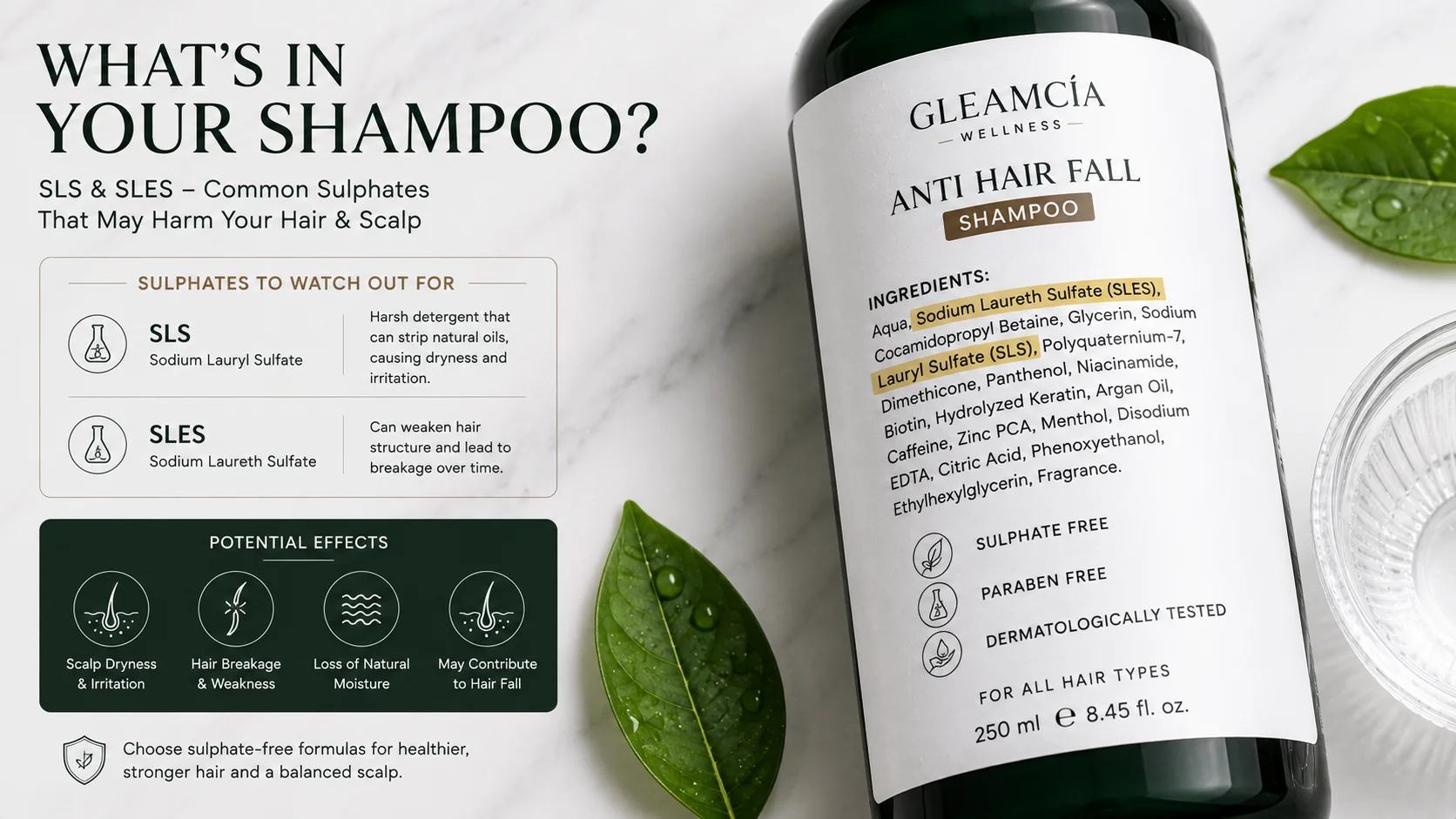
Sulphates are a category of synthetic surfactants — cleansing agents — added to shampoo to create that thick, satisfying lather most of us grew up associating with a proper wash. The two most common ones are Sodium Lauryl Sulphate (SLS) and Sodium Laureth Sulphate (SLES).
They work by binding to oil and dirt and then rinsing away with water. That sounds useful, and in one sense it is. The issue is they are not selective about what they strip. They pull out oil, product buildup, dirt — and also the natural sebum your scalp actually needs to stay healthy.
Sulphates were originally developed as industrial degreasers. The concentration used in shampoos is lower, but the mechanism is the same: aggressive oil removal. For a scalp that already struggles with dryness, inflammation, or sensitivity, regular sulphate exposure adds up.
Does Sulphate Shampoo Cause Hair Loss? The Real Explanation
Sulphates do not yank hair out of your follicles. What they do is create conditions where hair becomes weaker, more brittle, and more prone to falling — and that distinction matters.
Here is the chain of events that connects sulphate shampoo to hair fall:
Step 1: Sulphates strip the scalp’s natural oil barrier. Your scalp produces sebum for a reason. It protects the skin, keeps the follicle environment moist, and maintains the scalp’s natural pH level.
Step 2: A stripped scalp becomes dry, irritated, and inflamed. Chronic scalp inflammation is one of the most overlooked drivers of hair loss. When the scalp is repeatedly irritated, follicles weaken. Weak follicles shed hair earlier in the growth cycle than they should.
Step 3: The hair shaft itself becomes damaged. Sulphates disrupt the cuticle — the protective outer layer of each strand. A damaged cuticle makes hair rough, porous, and fragile. That means more snapping during combing, more breakage at the roots, and hair that looks and feels noticeably thinner over time.
Step 4: The scalp overproduces oil to compensate. When the scalp loses too much sebum too fast, it sends signals to produce more. This often leads to greasy roots returning quickly, encouraging people to wash more frequently, which starts the whole cycle again.
So does sulphate shampoo cause hair loss directly? No. But does it create the exact environment where hair loss accelerates? Absolutely, yes.
Why You Shouldn’t Use Sulphate Shampoo — Especially If You Have Hair Fall
For someone with a healthy, oily scalp and no existing hair concerns, occasional sulphate shampoo use is less of a problem. But if you are already experiencing hair fall, switching away from sulphates is one of the most impactful things you can do — and here is why.
Sulphate shampoos are particularly problematic if you:
- Already have a dry or sensitive scalp
- Colour or chemically treat your hair (sulphates accelerate colour fade and damage treated strands faster)
- Have naturally fine or thin hair that cannot afford extra breakage
- Wash your hair daily or very frequently
- Have conditions like eczema, psoriasis, or seborrhoeic dermatitis on the scalp
- Are dealing with postpartum hair loss, where the scalp is already in a fragile state
The American Academy of Dermatology notes that scalp health is closely linked to hair density and growth. A persistently irritated scalp from harsh cleansers is not a foundation any follicle can thrive on.
Are Sulphate Shampoos Bad for Hair Loss Specifically?
Yes, and the connection is clearer than most product labels let on.
Research has shown that SLS in particular causes protein loss in hair fibres — proteins are what hair is structurally made of. When protein depletes, the strand becomes weak at the shaft, breaks more easily, and appears thinner. For someone already experiencing pattern hair loss or stress-related shedding, using a sulphate-heavy formula adds damage on top of damage.
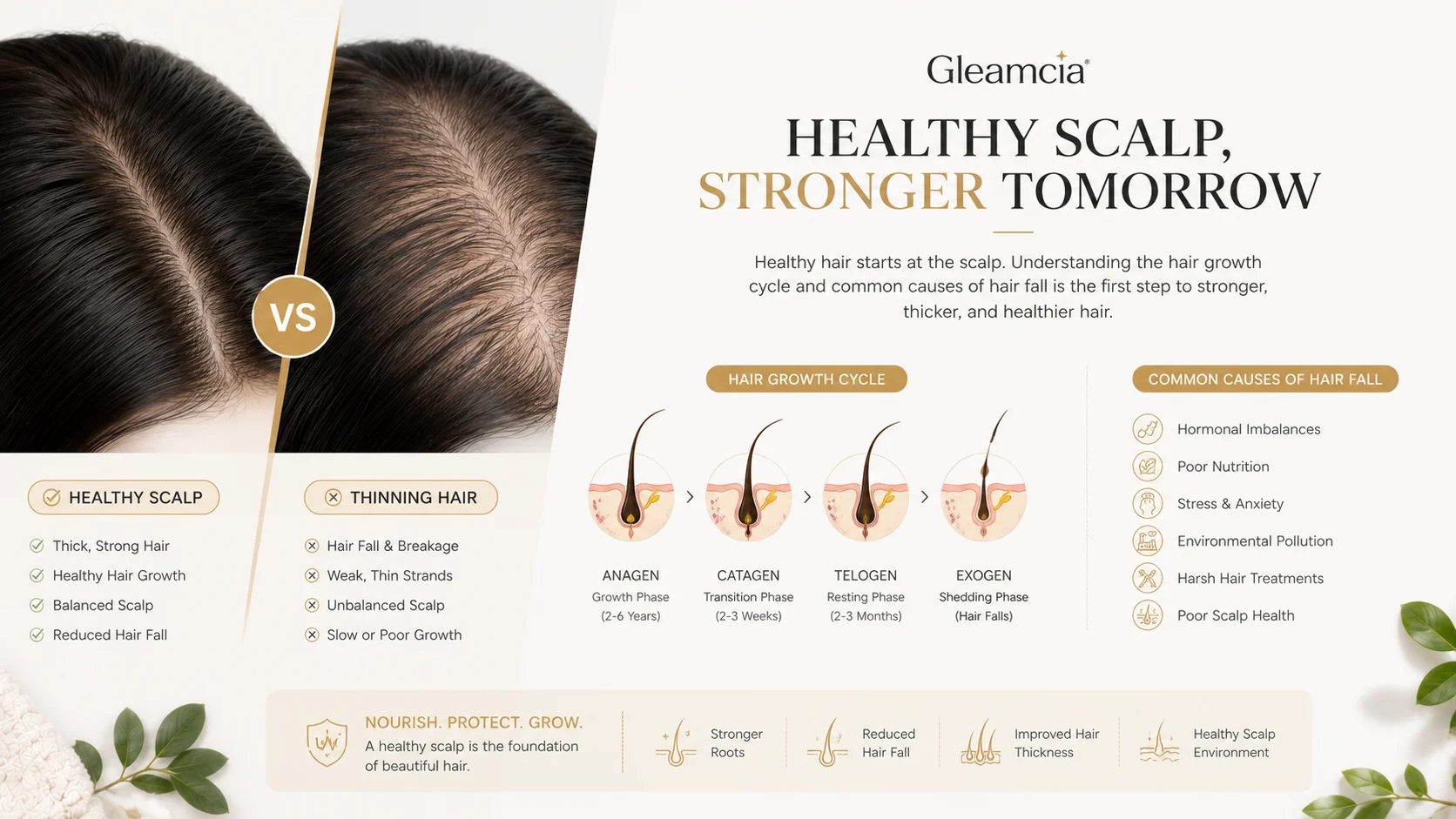
There is also a sensitivity angle. Sulphates are among the most common causes of contact dermatitis on the scalp. Scalp inflammation, whether mild or visible, disrupts the hair growth cycle by pushing more follicles into the shedding phase at once. This is called telogen effluvium and it is more common than most people realise.
The science does not say sulphates cause androgenic alopecia or genetic thinning. But for inflammation-driven or breakage-related hair loss, sulphate shampoo is unquestionably making things worse. Pair a sulphate-free switch with the Gleamcia anti-hair fall shampoo and you give your scalp a real chance to recover.
What Is the Unhealthiest Type of Shampoo for Hair Fall?
Not all harmful shampoos are the same, and sulphates are actually just one part of the problem. Here is what makes a shampoo genuinely bad for hair health:
- High-concentration SLS formulas — The strongest and most stripping surfactants, commonly found in budget shampoos
- Shampoos with parabens — Preservatives linked to scalp irritation and hormonal disruption with prolonged use
- Formulas with synthetic fragrances — A common sensitiser that triggers allergic contact dermatitis on the scalp
- Shampoos with silicone buildup without chelating agents — Create a film over the scalp that suffocates follicles over time
- High alcohol content formulas — Strip moisture aggressively and increase brittleness and breakage
- Shampoos with formaldehyde-releasing preservatives — Found in some cheaper formulations and linked to scalp irritation and hair damage
The worst combination for someone with hair fall is an SLS-heavy, fragrance-loaded, paraben-containing formula used daily on a sensitive scalp. Switching to a clean, sulphate-free formula with active ingredients like biotin, caffeine, or keratin is a complete reversal of everything that pattern of damage creates.
Sulphate Shampoo vs Sulphate-Free Shampoo for Hair Fall
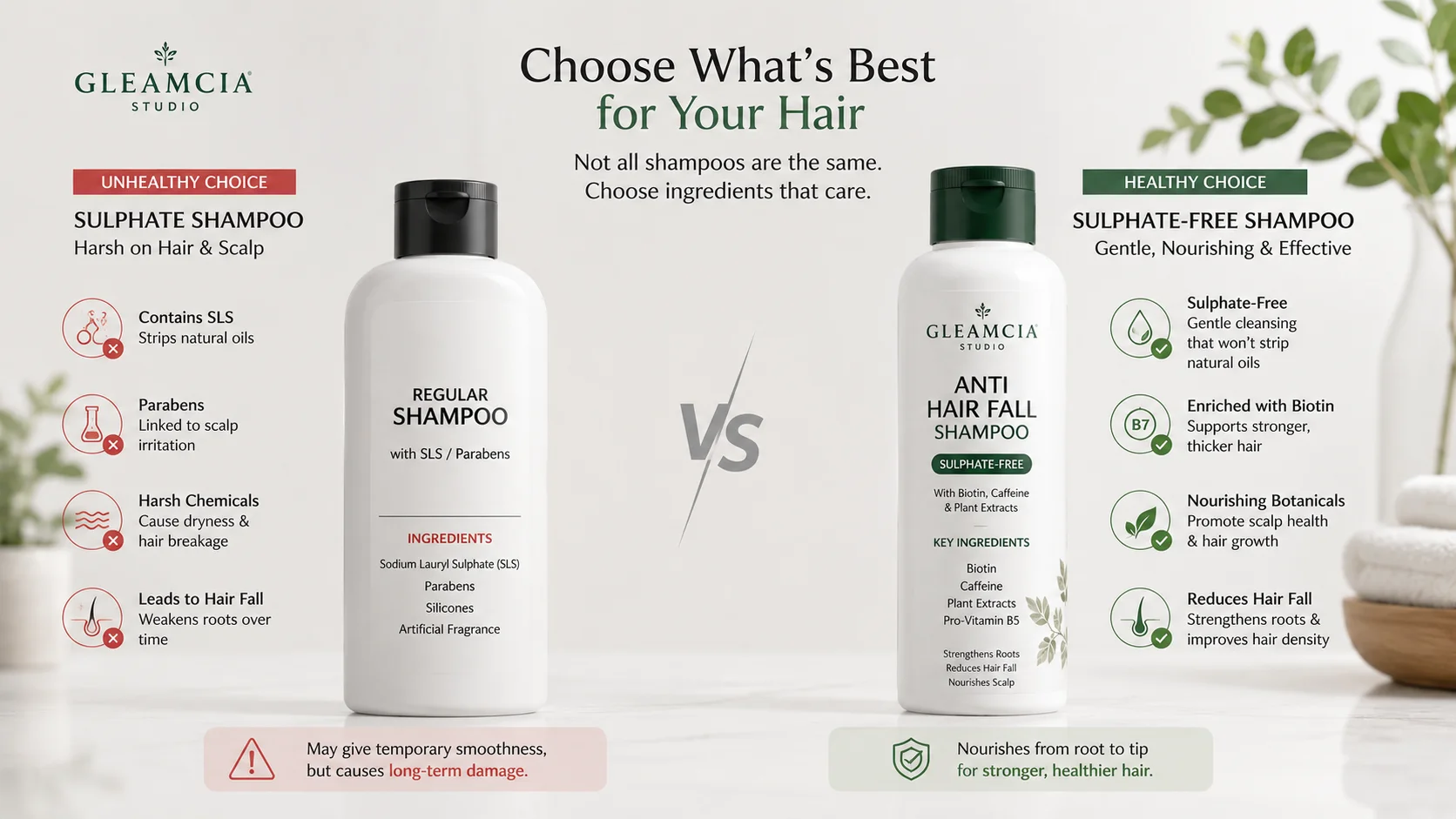
Here is a direct comparison to see the difference clearly:
| Feature | Sulphate Shampoo | Sulphate-Free Shampoo |
| Lather | Rich and dense | Lighter but still effective |
| Scalp stripping | Aggressive, removes natural oils | Gentle, preserves moisture balance |
| Hair shaft damage | Disrupts cuticle with repeated use | Maintains cuticle integrity |
| Scalp inflammation risk | Higher, especially with daily use | Significantly lower |
| Suitable for colour-treated hair | No, accelerates fade and damage | Yes, colour-safe |
| Best for hair fall | No | Yes |
| Works with active ingredients | Poor — strips actives before they work | Yes — allows actives to absorb and function |
| Daily use recommendation | Only for very oily, non-sensitive scalps | Suitable for most hair types daily |
The switch to sulphate-free is not about lather preference. It is about giving your scalp the environment it needs for hair to grow and stay in place.
Who Should Definitely Switch Away from Sulphate Shampoo?
Some people feel the impact of sulphates more than others. If you fall into any of these groups, switching to a sulphate-free formula is not optional, it is the right move:
- Anyone actively experiencing hair fall or thinning
- People with colour-treated, bleached, or chemically relaxed hair
- Those with dry scalp, dandruff, or scalp eczema
- Individuals with fine or low-density hair prone to breakage
- People who wash their hair every day
- Those using keratin treatments or bond repair products
- Pregnant or postpartum women with already fragile hair cycles
For everyone else, switching still makes sense. There is genuinely no benefit to keeping sulphates in your routine once you understand what they are doing underneath the surface.
Is It Better to Use Shampoo Without Sulphates?
For hair health, scalp health, and hair fall prevention, the answer is yes.
Sulphate-free shampoos use gentler surfactants like cocamidopropyl betaine, decyl glucoside, or sodium cocoyl isethionate. These clean the scalp effectively without stripping the moisture barrier or irritating follicles. They preserve the scalp’s natural pH, which sits around 5.5. Most sulphate-heavy shampoos disrupt this pH, leaving the scalp more vulnerable to bacterial growth, inflammation, and increased shedding.
Sulphate-free formulas also work better as a base for active ingredients. When you are using a shampoo with biotin, caffeine, saw palmetto, or zinc, you want those ingredients to penetrate and work — not get stripped away before they have a chance. Gentle surfactants allow this. Aggressive ones do not.
The one adjustment most people need to make is expectation around lather. Sulphate-free shampoos produce less foam. That does not mean they are cleaning less effectively. It means they are doing the job without the unnecessary aggression.
Check out the Gleamcia Hair Care range for sulphate-free shampoos with proven actives, built for hair fall reduction and long-term scalp health.
How to Transition from Sulphate to Sulphate-Free Shampoo
Switching shampoo formulas is not always immediately seamless. Some people experience an adjustment period of one to two weeks where the scalp recalibrates its oil production. Here is how to make the transition smoothly:
- Do not switch back early if your hair feels different in the first week. The scalp needs time to normalise sebum production after sulphate dependence.
- Wash slightly more frequently for the first two weeks if needed. Once the scalp adjusts, you will likely find you need to wash less.
- Use a scalp exfoliating treatment once a week during the transition to clear any buildup from previous silicone or product residue.
- Pair with a lightweight conditioner from mid-length to ends to maintain softness without weighing roots down.
- Give it at least 4 to 6 weeks before assessing the full impact on hair fall and scalp condition.
How to Reduce Hair Fall Without Sulphate Shampoo
A sulphate-free shampoo is the right foundation, but hair fall reduction works best when you support it with a few other habits:
- Scalp massage during every wash improves blood circulation to follicles and helps active ingredients penetrate
- Protein-rich diet keeps keratin levels up since hair is a protein structure
- Consistent biotin intake through diet or supplements supports hair strand strength from within. Browse Gleamcia’s full hair care and supplement range for options
- Reduce heat styling which weakens an already damaged cuticle further
- Manage stress levels since stress hormones like cortisol are directly linked to increased hair shedding
- Stay hydrated since the scalp, like all skin, needs adequate water intake to stay healthy
What Does Switching to Sulphate-Free Shampoo Cost in Pakistan?
Sulphate-free shampoo pricing is driven by a few specific factors worth understanding before you buy.
Formulation quality is the biggest cost driver. A sulphate-free shampoo that simply removes SLS from the label and replaces it with a cheap alternative surfactant is not the same as one formulated with active ingredients like biotin, caffeine, or keratin alongside the gentle cleansing base. The latter costs more because there is more in it.
Bottle size matters for daily use. A 200ml sulphate-free shampoo used every day or two will run out faster than you expect. Larger sizes or bundles from the same range are more economical per use and deliver better long-term results.
Sulphate-free formulas often also eliminate parabens and synthetic fragrances, which adds to formulation complexity. You are paying for a cleaner, more targeted product.
Nationwide delivery across Pakistan from Karachi is available at gleamcia.com with competitive shipping rates. Visit gleamcia.com/shop for current prices on the hair care range.
Why Choose Gleamcia
Gleamcia formulates every hair care product with a clear purpose: clean ingredients, proven actives, and results that hold up with consistent use.
- Sulphate-free and paraben-free formulations that protect the scalp rather than strip it
- Active ingredients like biotin, caffeine, and keratin included at meaningful concentrations, not just label decoration
- Clinically inspired formulas tested for safety and efficacy before reaching your shelf
- Nationwide delivery across Pakistan, from Karachi to Islamabad, Lahore to Peshawar
- Full transparency on ingredients so you know exactly what you are putting on your scalp
Frequently Asked Questions
1. Why shouldn’t you use sulphate shampoo? Sulphate shampoos strip the scalp’s natural oil barrier, disrupt the pH balance, and damage the hair cuticle with repeated use. For anyone dealing with hair fall, a dry scalp, or colour-treated hair, sulphate shampoos accelerate the damage that is already happening. Switching to a sulphate-free formula removes the biggest source of scalp stress in your routine.
2. Is it better to use shampoo without sulphates? For scalp health and hair fall, yes. Sulphate-free shampoos clean effectively without stripping natural moisture, causing inflammation, or damaging the hair shaft. They also work better with active ingredients like biotin and caffeine because they do not wash actives away before they can absorb into the scalp. The lather is lighter but the results over time are noticeably better.
3. What is the unhealthiest shampoo for hair fall? The worst formula for someone with hair fall combines high-concentration SLS or SLES, synthetic fragrances, parabens, and high-alcohol content. This combination strips the scalp aggressively, triggers inflammation, damages the cuticle, and creates a cycle of dryness and overproduction that weakens follicles over time. Budget shampoos with long ingredient lists full of unfamiliar chemicals are often the worst offenders.
4. Are sulphate shampoos bad for hair loss? Yes, particularly for inflammation-driven or breakage-related hair loss. Sulphates cause scalp irritation and protein loss in hair fibres, both of which contribute to increased shedding. While sulphates do not cause genetic or hormonal hair loss on their own, they significantly worsen conditions that are already there. Removing them from your routine is one of the most straightforward changes you can make for hair fall improvement.
5. Does sulphate shampoo cause hair loss directly? Not in the way that genetics or hormones do. But sulphates create scalp inflammation and cuticle damage that push more follicles into the shedding phase earlier than normal. Over months of regular use, this shows up as increased hair fall, thinning, and reduced density. The connection is real, even if it is indirect.
6. How long does it take to see improvement after switching to sulphate-free shampoo? Most people notice the scalp feeling calmer and less irritated within 2 to 3 weeks. Reduced shedding during washing typically becomes noticeable by the 4 to 6 week mark. Visible improvements in hair thickness and density take 2 to 3 months of consistent use with a sulphate-free formula that contains active ingredients.
7. Can sulphate-free shampoo actually clean hair properly? Absolutely. Sulphate-free surfactants like decyl glucoside and cocamidopropyl betaine remove dirt, oil, and product buildup effectively. The lather is lighter but the cleansing is thorough. If your hair feels weighed down initially after switching, a scalp exfoliation treatment once a week clears residue from previous silicone-heavy products and speeds up the adjustment.
Make the Switch and Give Your Scalp What It Needs
Your daily shampoo is either working for your hair or against it. If it contains sulphates, there is a straightforward upgrade available. Order from the Gleamcia Hair Care range via our online store with nationwide delivery across Pakistan.
You can also order directly on WhatsApp at 0336 1223363 and get personalised product advice for your scalp type and hair fall concern.
Gleamcia delivers from Karachi to every city across Pakistan. The switch starts with one better product choice.