Introduction
Dandruff is easy to dismiss as just a cosmetic problem — visible flakes, maybe some scalp itching, an embarrassing white dusting on shoulders. The hair fall that follows is where it stops being dismissable. And for a lot of people in Pakistan, where Malassezia overgrowth and scalp conditions are common in the heat and humidity, the dandruff and the hair fall are being treated as two separate problems when they are actually the same one.
Does dandruff cause hair fall? It does — not directly in the way that DHT damages follicles, but through a chain of scalp inflammation that is just as real and just as worth treating urgently. This guide explains the full mechanism, how to stop both conditions simultaneously, which ingredients actually work, and how long recovery takes. Browse the Gleamcia Hair Care range for anti-dandruff and anti-hair fall formulas that address both sides of the problem at once.
What Is Dandruff and What Actually Causes It?
Dandruff — medically known as seborrhoeic dermatitis when more severe — is not simply a dry scalp condition. This is one of the most persistent misconceptions about it. Dandruff is primarily caused by an overgrowth of a naturally occurring yeast-like fungus called Malassezia globosa.
Malassezia is present on virtually every human scalp. The problem starts when it proliferates beyond its normal level — which it does when the conditions favour it. Excess sebum production gives Malassezia more to feed on. Warm, humid environments — very much characteristic of Pakistan’s summer — create ideal conditions for its growth. Stress, hormonal changes, and weakened immune responses also allow it to overgrow.
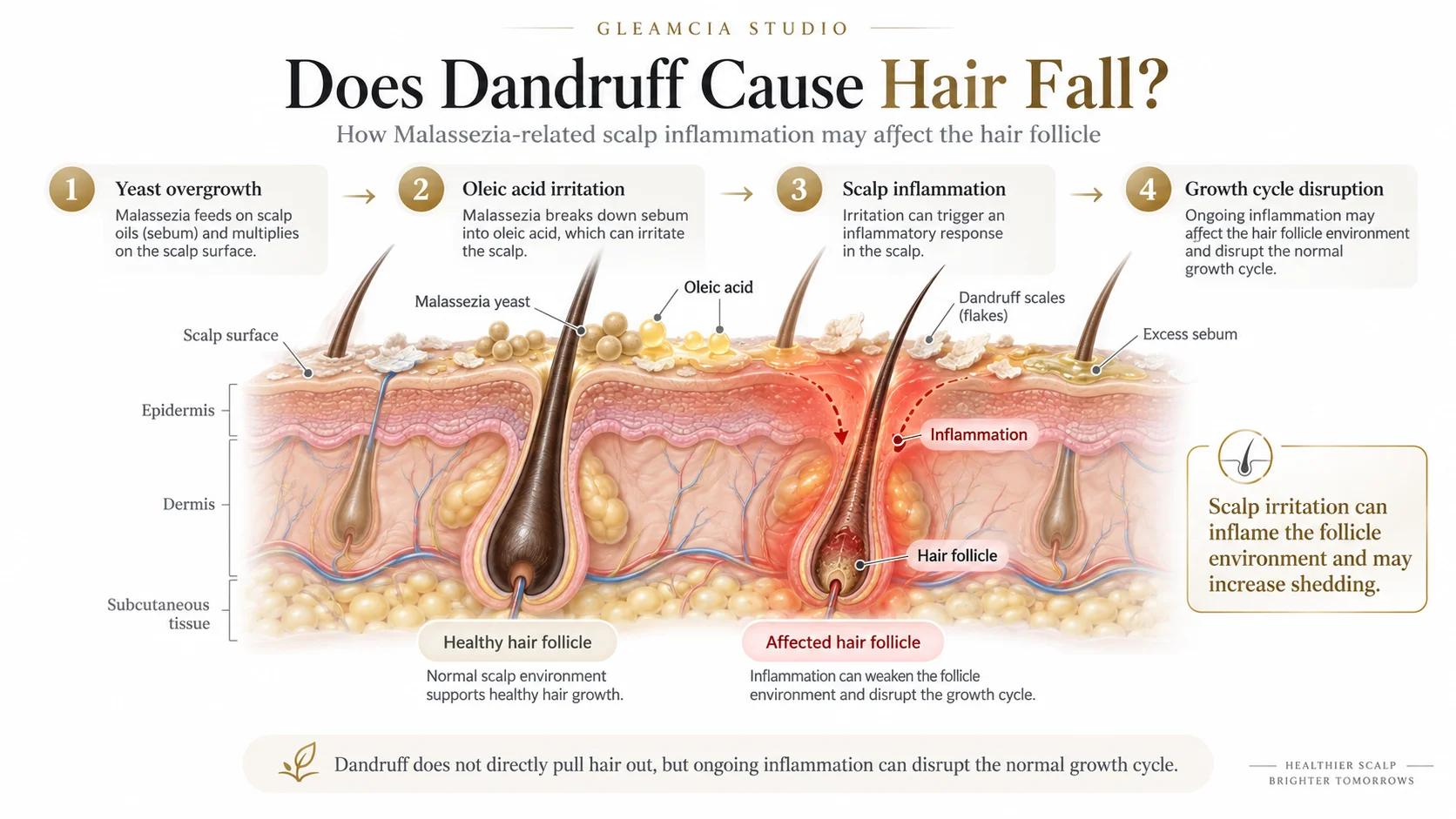
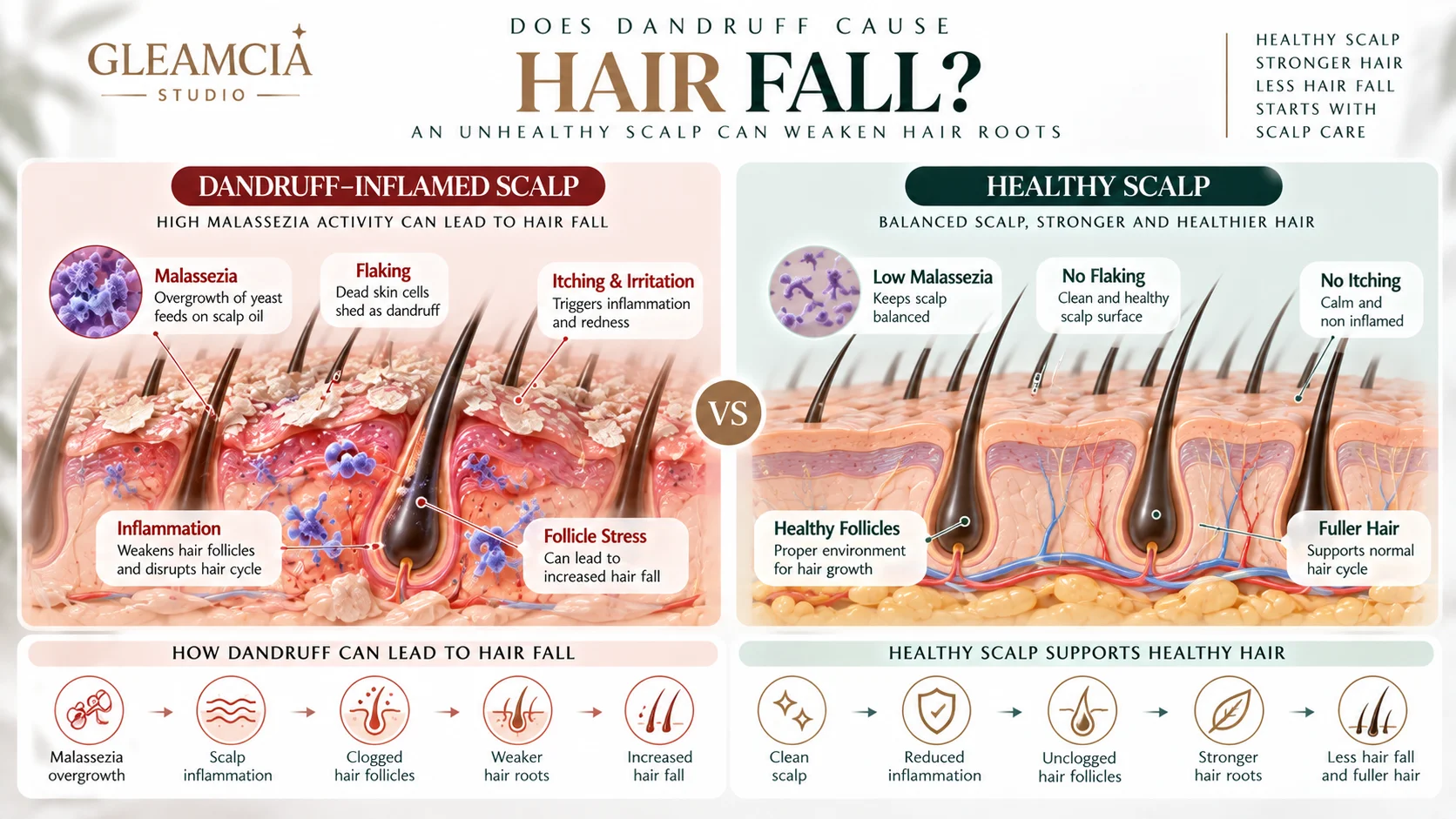
As Malassezia metabolises sebum, it produces oleic acid as a byproduct. Oleic acid triggers an inflammatory response in the scalp. The skin surface becomes irritated, accelerates its cell turnover in response, and the resulting rapid shedding of those cells is what appears as white or yellowish flakes.
Dry scalp flaking — often confused with dandruff — is a different, simpler condition: the scalp lacks moisture and sheds dry cells. It does not involve Malassezia and does not respond to antifungal actives the way dandruff does.
Does Dandruff Cause Hair Fall? The Real Mechanism
Yes. Dandruff causes hair fall through scalp inflammation — and the route is more direct than most people realise.
When Malassezia overgrowth triggers chronic inflammation on the scalp, that inflammation does not stay limited to the surface skin. The hair follicle is embedded in the dermis — the deeper skin layer — and is surrounded by the same tissue experiencing the inflammatory response. The inflamed environment around the follicle disrupts the hair growth cycle in two specific ways.
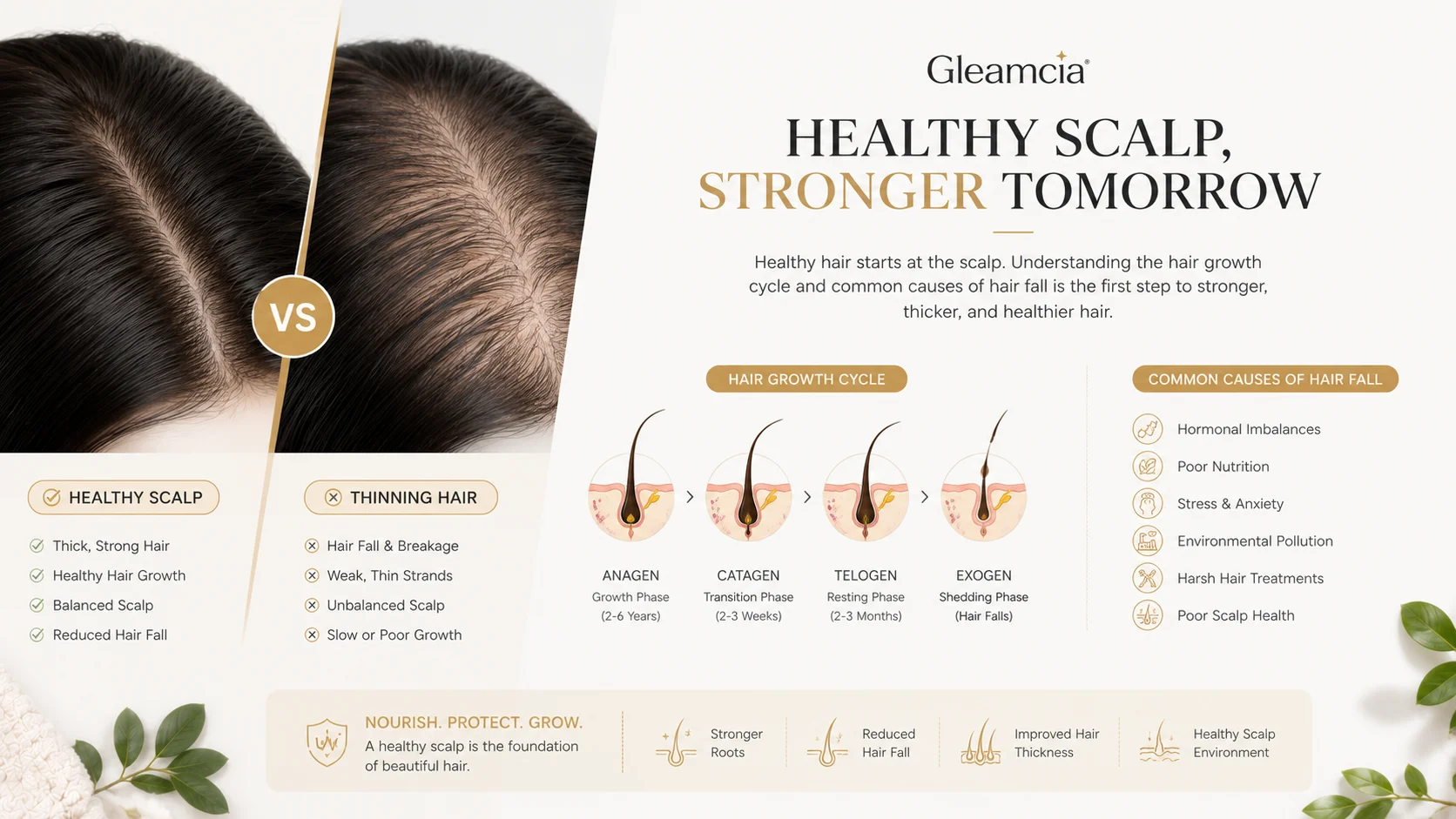
First, chronic scalp inflammation shortens the anagen (active growth) phase of the hair cycle. Follicles in an inflamed environment enter the resting phase — telogen — earlier than they normally would. Earlier telogen means earlier shedding. When multiple follicles experience this simultaneously across an inflamed scalp, the result is increased daily hair fall.
Second, the inflammation weakens the follicle’s structural environment. The anchoring tissues around each hair root are compromised by the inflammatory process, and strands that would normally shed only at the end of their full growth cycle shed sooner and more easily.
Beyond the biological mechanism, scratching is a significant amplifier. Itchy dandruff that is scratched repeatedly creates mechanical trauma to the scalp — physically loosening hair at the root and creating micro-abrasions that worsen the inflammatory environment further.
Dandruff does not destroy hair follicles the way genetic pattern hair loss does. But chronic, untreated dandruff with sustained scalp inflammation absolutely accelerates shedding and produces visible hair thinning over months and years.
The Malassezia-Inflammation-Hair Fall Chain in Pakistan’s Climate
Pakistan’s environment creates particularly favourable conditions for Malassezia overgrowth. Karachi’s coastal humidity — regularly above 70% during the monsoon — combines with temperatures above 35°C to produce exactly the warm, damp, sebum-rich environment that Malassezia thrives in. Lahore’s pre-monsoon heat combined with the city’s particular dust and pollution load adds to scalp congestion that feeds fungal growth.
This is why dandruff rates in Pakistan’s urban population are significantly higher during summer and the monsoon season. It is also why post-monsoon, from September through November, often produces the highest rates of dandruff-related hair fall — the scalp inflammation that built up during the peak Malassezia season translates into accelerated shedding in the months that follow.
Managing dandruff in Pakistan requires year-round vigilance, not just a seasonal treatment. The climatic conditions that favour Malassezia are present across most of the year in most of the country.
How to Stop Dandruff and Hair Fall Together
These two conditions share the same trigger — scalp inflammation from Malassezia — which means addressing one directly reduces the other. The routine that works for both:
An anti-dandruff shampoo with the right active ingredients is the foundation. The active determines what the shampoo actually does to the Malassezia population. Used two to three times weekly with a scalp massage during application, a correctly formulated anti-dandruff shampoo reduces the fungal overgrowth, reduces the oleic acid byproduct, and reduces the inflammation driving both the flaking and the hair fall.
Scalp massage during every wash stimulates blood circulation to the follicle bed and physically removes buildup from follicle openings. A massage during shampoo application also ensures the active ingredients spend adequate time in contact with the scalp rather than being distributed primarily through the hair lengths.
A scalp serum or anti-hair fall spray applied between washes addresses follicle health between wash days — particularly useful when washing is limited to two to three times weekly. Caffeine, niacinamide, and rosemary extract applied to a clarified scalp between washes provide ongoing follicle stimulation without requiring daily washing that can dry the scalp.
Diet and lifestyle changes that reduce sebum overproduction — reducing refined sugar intake, managing stress, getting adequate sleep — reduce the substrate that Malassezia feeds on and lower the conditions that trigger overgrowth.
Active Ingredients That Stop Both Dandruff and Hair Fall
The choice of anti-dandruff shampoo ingredient is the most important decision in the treatment approach. These are the ones with the clearest evidence:
Zinc Pyrithione (ZPT) is the most widely used anti-dandruff active globally. It has both antifungal and antibacterial properties that reduce Malassezia population on the scalp. Used two to three times weekly, it significantly reduces dandruff within two to four weeks of consistent use. ZPT also reduces the scalp inflammation that drives hair fall — making it one of the most relevant ingredients when both dandruff and hair fall are present.
Ketoconazole is particularly important in the dandruff-plus-hair-fall context. Beyond its antifungal action against Malassezia, ketoconazole has demonstrated DHT-blocking properties at the scalp level. Studies show it reduces the concentration of DHT in the scalp environment when used regularly as a shampoo. This makes it the only anti-dandruff active that also addresses the hormonal component of hair fall simultaneously.
Selenium Sulfide reduces the rate of scalp cell turnover that produces the visible flaking. It is effective for moderate to severe dandruff but can dry the scalp with overuse. Best used two to three times weekly rather than daily.
Salicylic Acid is a BHA that dissolves the flake buildup on the scalp surface and inside follicle openings. It does not address Malassezia itself but clears the sebum and dead cell accumulation that the fungus feeds on — effectively removing the food source alongside other anti-fungal actives.
Piroctone Olamine is a gentler antifungal alternative to ketoconazole, used in sulphate-free formulas. Less evidence base than ketoconazole but better tolerated for sensitive scalps and appropriate for continuous daily use.
The American Academy of Dermatology recommends medicated shampoos containing these actives as the first-line treatment for seborrhoeic dermatitis, noting that consistent use over several weeks is what produces sustained control.
Can Hair Grow Back After Dandruff-Related Hair Fall?
Yes — in most cases, yes. Dandruff-related hair fall does not permanently damage follicles in the way genetic pattern hair loss does.
The hair fall caused by dandruff is driven by follicle cycle disruption from inflammation. Once the inflammation is reduced through consistent antifungal treatment, the follicles are able to return to their normal growth cycle. The hairs that shed prematurely will regrow as those follicles cycle back into anagen.
The timeline for recovery after addressing dandruff runs roughly in parallel with the general telogen effluvium recovery timeline. Shedding begins to reduce within four to eight weeks of consistent anti-dandruff treatment. New, finer hairs become visible at the scalp level within two to three months. Full density recovery — where the new growth has matured into terminal strands — takes six to twelve months from the start of consistent treatment.
The caveat is duration. Dandruff that has been present and untreated for several years, with sustained, chronic scalp inflammation throughout that period, can produce more lasting effects on the follicle environment. The likelihood of full recovery is higher when treatment begins early rather than after years of untreated scalp inflammation.
For people who notice both dandruff and hair fall together, treating the dandruff immediately is the most important intervention — it addresses the shared cause of both conditions simultaneously.
Which Fruit Stops Hair Fall?
No single fruit stops hair fall on its own, but the right fruits provide the nutrients that hair follicles depend on and that are most commonly deficient when hair fall accelerates.
Guava is arguably the most impactful fruit for hair health available in Pakistan. Guava contains more Vitamin C per 100g than any common citrus fruit — and Vitamin C is essential for collagen synthesis (the protein that gives the follicle its structural support) and for iron absorption from plant foods. Low iron is one of the most common nutritional drivers of hair fall, particularly in women across Pakistan. Eating guava with iron-rich meals significantly improves how much of that iron the body absorbs.
Amla (Indian Gooseberry) has the strongest traditional and developing scientific reputation for hair health of any fruit in South Asian medicine. It is exceptionally high in Vitamin C and antioxidants, and is used both consumed fresh and in hair oil and supplement formulas. Amla’s antioxidant content reduces oxidative stress at the follicle, which is increasingly recognised as a contributor to hair ageing and premature shedding.
Mango provides beta-carotene (pro-Vitamin A) that supports scalp cell renewal and sebum production regulation. Excessive Vitamin A supplementation actually causes hair fall, but adequate dietary beta-carotene from mango is entirely safe and supports healthy scalp cell cycling.
Banana contains Vitamin B6 which supports keratin production and the amino acid metabolism that builds hair structure. A daily banana alongside a protein-rich meal is a simple, accessible nutritional habit for hair health.
Avocado provides Vitamin E and oleic acid in a form that supports sebaceous gland health and strand lipid content. Less accessible than other fruits in Pakistan but worth including where available.
The broader principle: a diet rich in Vitamin C-containing seasonal fruits, paired with adequate protein and iron, addresses the nutritional deficiency side of hair fall more effectively than any supplement alone.
Why Is Gen Z Balding So Fast?
The question comes up constantly and the data behind it is real — younger generations are experiencing visible hair thinning earlier than previous ones.
The causes are converging from multiple directions at once. Chronic stress is the most significant driver — academic pressure, social media-driven comparison anxiety, career uncertainty, and the financial pressures facing young people in Pakistan’s current economy all produce elevated cortisol levels that suppress hair follicle activity over time.
Diet is the second major factor. Ultra-processed foods with low protein, zinc, and iron content have replaced more nutrient-dense home cooking in many urban households. The amino acids and micronutrients hair follicles need to produce dense, strong hair are not being consistently supplied.
Scalp health is essentially unaddressed in most young people’s routines. There is significant awareness of facial skincare in Gen Z but the scalp receives no equivalent attention — no anti-hair fall shampoo, no scalp serum, no awareness that scalp conditions like dandruff that go untreated compound into hair fall over time.
Hard water in Karachi, Lahore, and other cities adds cumulative mineral damage with every wash. And heat styling from the teenage years creates structural damage to the hair shaft over years before visible thinning becomes apparent.
The silver lining is that every one of these factors is modifiable. Starting a scalp-active hair care routine, addressing nutrition, managing stress, and treating dandruff early rather than letting it drive chronic inflammation for years — these interventions produce significantly better long-term hair outcomes than waiting until the thinning is pronounced.
Is Hair Loss Normal for a 22-Year-Old Male?
Losing 50 to 100 hairs per day is normal at any age, including 22. That baseline shedding is part of the hair growth cycle.
Visible thinning at 22 is less universally normal, but it is more common than most people assume. Male androgenetic alopecia — pattern hair loss — can begin as early as the late teens in men with the genetic predisposition. The American Academy of Dermatology notes that by age 35, two-thirds of men have appreciable hair loss. For South Asian men, genetic hair loss patterns often present earlier than the average in Western studies.
So if a 22-year-old male is noticing a receding hairline, thinning at the temples, or a widening part at the crown — that is not uncommon, and crucially, it is worth treating now rather than later. Hair loss interventions are significantly more effective at early stages than at advanced ones. Follicles that are miniaturising but still present are more responsive to topical DHT blockers and minoxidil than follicles that have been dormant for years.
If the hair fall is diffuse — happening all over the scalp, not in a defined pattern — stress, nutritional deficiency, dandruff-driven inflammation, or telogen effluvium from illness are the more likely causes at 22, and all of these are treatable without long-term pharmaceutical intervention.
The recommendation for any 22-year-old male experiencing noticeable hair fall is to start a targeted routine immediately, address any scalp conditions like dandruff, review nutritional habits, and see a dermatologist if patterned thinning is visible.
Anti-Dandruff Shampoo vs Anti-Hair Fall Shampoo: Which One You Need and When
| Feature | Anti-Dandruff Shampoo | Anti-Hair Fall Shampoo |
| Primary target | Malassezia overgrowth, scalp inflammation | Follicle stimulation, DHT reduction, strand strength |
| Active ingredients | Zinc Pyrithione, Ketoconazole, Selenium Sulfide | Caffeine, Saw Palmetto, Biotin, Niacinamide |
| Addresses dandruff | Yes — directly | Partially — through improved scalp health |
| Reduces hair fall from dandruff | Yes — by reducing the inflammation driving it | Partially — does not target Malassezia |
| Reduces hair fall from DHT | With Ketoconazole — yes | Yes — with Saw Palmetto |
| Better when: | Visible dandruff, itchy scalp, scalp flaking | Hair fall without visible scalp condition |
| When to use both | When dandruff AND pattern hair fall are both present | When hair fall is the dominant concern without dandruff |
| Frequency | 2 to 3 times weekly | 3 to 5 times weekly |
| Sulphate-free available | Yes — gentler formulas available | Yes — standard recommendation |
| Best combination | Anti-dandruff shampoo 2x week + anti-hair fall shampoo 2x week | As above for dual-concern routines |
For people dealing with both dandruff and hair fall simultaneously — which is very common in Pakistan — alternating between an anti-dandruff shampoo and an anti-hair fall shampoo through the week is a practical and effective approach. Ketoconazole anti-dandruff shampoo used two to three times weekly, anti-hair fall shampoo for the remaining washes, addresses both conditions with targeted actives on each wash day.
Building a Complete Routine That Addresses Both Dandruff and Hair Fall
Twice a week (anti-dandruff wash days):
- Apply anti-dandruff shampoo with Zinc Pyrithione or Ketoconazole to the scalp
- Massage in for two to three minutes — contact time matters for antifungal actives
- Leave on for an additional two minutes before rinsing
- Follow with a conditioner from mid-length to ends only
Two to three times a week (anti-hair fall wash days):
- Apply anti-hair fall shampoo with caffeine, biotin, and niacinamide
- Scalp massage for two to three minutes
- Rinse, condition ends
Daily (between washes):
- Scalp spray or serum with caffeine and niacinamide on the scalp
- No need to wash off — leave-on products extend active ingredient contact time significantly
Weekly:
- Scalp exfoliation once per week — removes the flake buildup and sebum congestion that Malassezia feeds on
- Light oil massage with rosemary-infused oil for scalp circulation
Supplements:
- Biotin 2,500 to 5,000 mcg daily
- Zinc supplement if dietary intake is low — zinc deficiency is common in Pakistan and directly linked to both dandruff severity and hair fall
- Iron if menstrual or dietary deficiency is present
Common Mistakes That Make Dandruff and Hair Fall Worse Together
Using anti-dandruff shampoo every day. Daily use of Selenium Sulfide or high-concentration Ketoconazole dries the scalp and can cause a rebound increase in sebum production that worsens Malassezia conditions. Two to three times per week is the correct frequency for most active anti-dandruff ingredients.
Oiling the scalp heavily without proper removal during an active dandruff episode. Heavy oil on a Malassezia-active scalp provides more sebum substrate for the fungus. If oiling during active dandruff, use lighter oils, limit application to one to two hours, and remove thoroughly with an antifungal shampoo.
Scratching the scalp. Itching is the symptom — scratching it creates wounds, increases bacterial risk, worsens inflammation, and directly increases mechanical hair fall. Treating the dandruff is the path to stopping the itch, not yielding to it.
Treating dandruff and hair fall as separate concerns with separate products that might conflict. Some anti-dandruff shampoos contain sulphates that over-strip the scalp when used alongside a routine that already includes other strong actives. Building a coherent routine where products are compatible is more effective than independently buying whatever seems best for each condition.
Stopping anti-dandruff treatment as soon as flakes reduce. Dandruff is driven by Malassezia that returns when treatment stops. The standard recommendation is to continue maintenance use — once a week — even after the visible dandruff clears to prevent recurrence.
Results Timeline for Dandruff-Related Hair Fall Treatment
Getting the timeline right prevents people from abandoning effective treatment too early.
- Week 1 to 2: Scalp itching reduces significantly with consistent anti-dandruff shampoo use. Flaking begins to decrease.
- Week 3 to 4: Visible dandruff substantially reduced. Hair fall from the scratch-and-inflammation cycle begins to slow.
- Week 6 to 8: Daily shedding noticeably reduced as scalp inflammation comes under control and follicles stabilise.
- Month 3: Scalp condition clearly improved. Hair fall returned to or approaching pre-dandruff baseline. New, fine hairs may be visible.
- Month 6 to 12: Density recovery as the new growth matures. Full recovery for most cases of dandruff-related hair fall when treatment is maintained consistently.
Aftercare Habits for Managing Dandruff and Hair Fall Together
Do:
- Wash hair in lukewarm to cool water — hot water stimulates sebaceous glands and increases the sebum that Malassezia feeds on
- Change pillowcases two to three times per week — used pillowcases trap Malassezia, sebum, and scalp debris that recontaminate the scalp
- Reduce dietary refined sugar — Malassezia is stimulated by systemic factors including diet, and high sugar diets are associated with increased seborrheic dermatitis severity
- Keep the hair care routine consistent — both dandruff and hair fall require sustained treatment, not occasional use
Do not:
- Share hairbrushes or combs — Malassezia can transfer and contamination contributes to recurrence
- Leave hair wet for extended periods — a consistently damp scalp environment encourages fungal activity
- Apply leave-in products directly to the scalp when active dandruff is present — they can trap Malassezia against the scalp surface
What Does Anti-Dandruff and Anti-Hair Fall Shampoo Cost in Pakistan?
Anti-dandruff shampoos vary in price based on the active ingredient and concentration. Ketoconazole-based formulas typically price higher than Zinc Pyrithione formulas because Ketoconazole is a pharmaceutical antifungal active with broader mechanism impact. Selenium Sulfide sits between the two. Sulphate-free anti-dandruff formulas — which are better tolerated for regular use — add a formulation complexity cost over standard surfactant-based options.
Anti-hair fall shampoos at effective concentrations — caffeine, saw palmetto, and niacinamide at meaningful levels — cost more than basic hair fall shampoos that list these ingredients without disclosing concentration.
For people managing both conditions, an alternating routine between two targeted shampoos (anti-dandruff and anti-hair fall) requires buying both. Bundle pricing that includes both formulas reduces the per-product cost and ensures the two products are formulated to work alongside each other without conflicting ingredients.
Gleamcia ships from Karachi to every city in Pakistan. Visit gleamcia.com/shop for current pricing on the full hair care range.
Why Choose Gleamcia
Gleamcia understands that dandruff and hair fall are often the same problem seen from two angles — and formulates accordingly.
- Anti-dandruff and anti-hair fall formulas developed with active ingredients at concentrations that address both the fungal cause and the follicle consequence
- Sulphate-free bases that clean the scalp thoroughly without stripping the barrier that makes it more vulnerable to Malassezia overgrowth
- Products formulated for Pakistan’s climate — the heat, humidity, and hard water conditions that make dandruff and scalp inflammation more persistent here than in cooler, drier environments
- Transparent ingredient listings so you know exactly what active you are getting and at what concentration
- Nationwide delivery from Karachi to every city in Pakistan, fast dispatch, and reliable packaging
Frequently Asked Questions
1. Does dandruff actually cause hair fall? Yes — through scalp inflammation. Malassezia yeast overgrowth produces oleic acid as it metabolises scalp sebum. Oleic acid triggers an inflammatory response that disrupts the hair follicle growth cycle, pushing follicles into the resting phase earlier than normal and weakening the scalp environment that anchors hair at the root. Scratching the itchy scalp compounds the mechanical damage. Dandruff does not permanently destroy follicles the way pattern hair loss does, but chronic, untreated dandruff with ongoing inflammation produces real, progressive hair fall.
2. How can I stop dandruff and hair fall together? Use an anti-dandruff shampoo with Zinc Pyrithione or Ketoconazole two to three times weekly to control Malassezia at the source. Alternate with an anti-hair fall shampoo containing caffeine, niacinamide, and biotin on remaining wash days. Apply a scalp spray between washes for ongoing follicle stimulation. Scalp massage during every wash improves circulation. Biotin supplementation and a diet with adequate protein, iron, and zinc support the nutritional side. Manage stress — cortisol worsens both conditions simultaneously.
3. Can hair grow back after dandruff-related hair fall? Yes. Dandruff-related hair fall is driven by follicle cycle disruption from inflammation — the follicles themselves are not permanently damaged in the way pattern hair loss damages them. Once scalp inflammation is brought under control with consistent antifungal treatment, follicles return to the active growth cycle and hair regrowth begins. Visible shedding reduces within four to eight weeks. New growth becomes apparent within two to three months. Full density recovery takes six to twelve months with consistent treatment.
4. Which fruit is best for stopping hair fall? Guava is the most beneficial for hair health among fruits widely available in Pakistan — it has more Vitamin C than citrus fruits, which supports collagen synthesis and improves iron absorption. Amla (Indian gooseberry) has a strong traditional and developing scientific reputation for supporting hair health through its antioxidant content and Vitamin C levels. Mango provides beta-carotene that supports scalp cell renewal. No fruit directly stops hair fall, but Vitamin C-rich seasonal fruits combined with protein and iron-rich meals address the nutritional deficiency side of hair fall meaningfully.
5. Why is Gen Z balding so fast? Several factors are converging simultaneously: chronic psychological stress from academic, social media, and financial pressures that suppress hair follicle activity through cortisol; diets lower in protein, zinc, and iron than previous generations; absence of scalp care routines despite broader skincare awareness; untreated scalp conditions like dandruff that drive ongoing inflammation-related hair fall; hard water exposure in Pakistan’s cities; and earlier environmental triggering of genetic DHT sensitivity. All of these are modifiable — and the earlier a targeted hair care routine is started, the better the long-term outcome.
6. Is hair loss normal for a 22-year-old male? Losing 50 to 100 hairs daily is normal at any age. Visible patterned thinning at 22 — receding temples, crown thinning — is not uncommon given that male androgenetic alopecia can begin as early as the late teens in men with the genetic predisposition. By age 35, two-thirds of men have appreciable hair loss. If the thinning at 22 is diffuse (all over the scalp), stress, nutritional deficiency, or dandruff-driven inflammation are the more likely causes and are fully treatable. If it is patterned, early intervention with DHT-blocking topicals and minoxidil gives the best outcomes. Either way, starting a targeted routine at 22 is far better than waiting.
7. Can ketoconazole shampoo help with both dandruff and hair fall? Yes — ketoconazole is the only common anti-dandruff active with documented dual action. Its antifungal properties reduce Malassezia and the scalp inflammation that drives dandruff-related hair fall. Separately, it has demonstrated DHT-blocking properties at the scalp level through 5-alpha reductase inhibition, making it relevant for pattern hair fall alongside dandruff. Used two to three times weekly, ketoconazole shampoo addresses both conditions from the same application step — which is why it is particularly valuable when both dandruff and significant hair fall are present simultaneously.
Treat the Dandruff and You Are Treating the Hair FallToo
The connection between dandruff and hair fall is the same scalp inflammation — which means the same treatment addresses both. Start with the anti-dandruff active that matches your condition severity, pair it with a targeted anti-hair fall routine for the remaining wash days, and give the scalp three to six months of consistent care. Order from the Gleamcia Hair Care range via our online store — nationwide delivery across Pakistan, available at gleamcia.com.
Order via WhatsApp at 0336 1223363 for personalised guidance on the right anti-dandruff and hair fall routine for your scalp type and concern severity.