Introduction
Walk through any skincare aisle or browse any Pakistani beauty store online and you will find glow creams, moisturizers, and night creams lined up side by side — different names, similar packaging, often similar prices. The natural question is whether these are genuinely different products or just different marketing for the same thing.
The answer is that glow cream vs moisturizer vs night cream each occupies a distinct role in a skincare routine. The overlap is real, but the differences matter — especially when you are trying to figure out which one your skin actually needs, and whether you need all three or just one done right.
This guide explains what each product does, when to use each, and how to decide what your routine needs. Browse the Gleamcia Skin Care range for moisturizers, glow creams, and targeted face treatments formulated with active ingredients.
What Is a Moisturizer?
A moisturizer is the foundational hydration product in any skincare routine. Its job is to maintain the skin’s moisture balance — replacing water that evaporates from the skin’s surface throughout the day and preventing the barrier from drying out.
Moisturizers come in multiple textures: gels, lotions, creams, and balms. The right texture depends on your skin type, not on the product label.
What moisturizers typically contain:
- Humectants like hyaluronic acid and glycerine — draw water into the skin
- Emollients like squalane and jojoba oil — smooth and soften the skin surface
- Occlusives like shea butter or dimethicone — form a protective layer that slows water loss
A well-formulated moisturizer does not need to do anything beyond hydration and barrier support to be effective. It does not need to brighten, correct, or repair — that is the serum’s job. The moisturizer seals everything in and keeps the skin environment stable.
Use a moisturizer morning and night. It is not optional for any skin type, including oily skin.
What Is a Glow Cream?
A glow cream is a moisturizer with added luminosity-boosting ingredients. It hydrates like a standard moisturizer but also contains actives that target radiance, brightness, and an even skin tone.
Ingredients commonly found in glow creams:
- Niacinamide — Reduces dark spots and redness, evens skin tone over time
- Vitamin C derivatives — Brightening antioxidants that work on discolouration and dullness
- Pearl powder or mica — Provides an immediate, cosmetic luminosity effect (temporary)
- Alpha arbutin — Targets hyperpigmentation and post-inflammatory marks
- AHAs at low concentrations — Gentle exfoliation that reveals fresher skin underneath
The distinction matters: a glow cream is a 2-in-1 product that handles both hydration and active brightening. This makes it a good choice for people who want to simplify their routine — one fewer step without giving up results.
What a glow cream cannot fully replace is a dedicated vitamin C serum or brightening serum at the concentrations those products deliver. A glow cream spreads the active ingredient across a larger formula, meaning lower concentration. For mild or maintenance-level brightening, that is enough. For more pronounced dark spots or melasma, a standalone serum under the glow cream delivers better results.
What Is a Night Cream?
A night cream is a richer, heavier formulation specifically designed for use during sleep. It takes advantage of the skin’s natural overnight repair cycle — the period between around 11pm and 3am when cell turnover is highest and the skin absorbs and uses active ingredients most efficiently.
What makes a night cream different from a regular moisturizer:
- Richer texture with more emollient and occlusive content — designed to stay on the skin for 6 to 8 hours without spreading to a pillow and disappearing
- Contains repair-focused actives like retinol, peptides, or niacinamide that work best without UV interference
- Often fragrance-free or low-fragrance because prolonged contact with the skin overnight increases sensitisation risk from fragrance ingredients
- Formulated without SPF (which a daytime moisturizer may include) since UV protection is not needed at night
Night creams are not the same as simply applying extra moisturizer before bed. The formulation is specifically engineered for prolonged contact and active delivery during sleep.
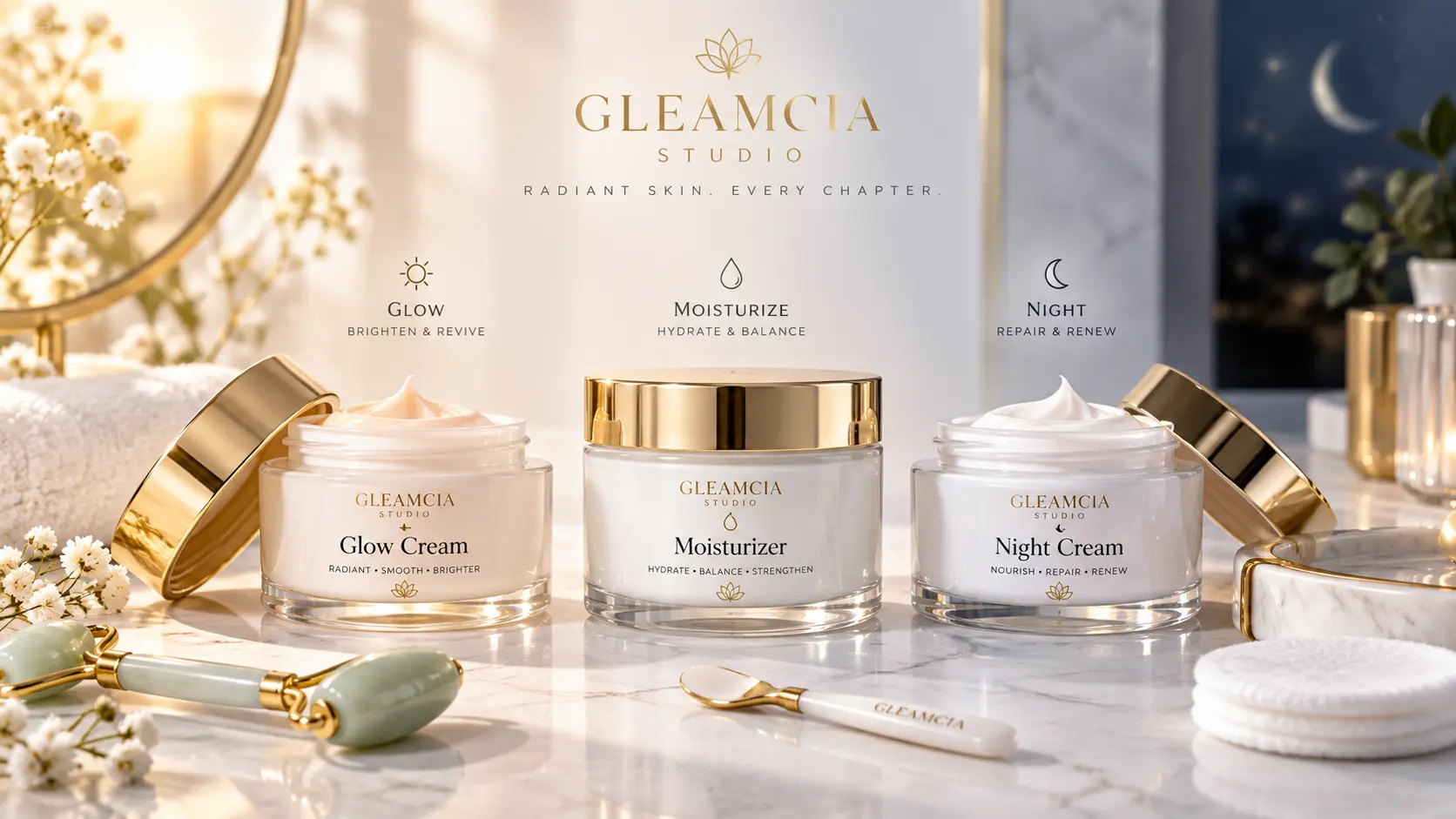
Glow Cream vs Moisturizer vs Night Cream: Key Differences
| Feature | Moisturizer | Glow Cream | Night Cream |
| Primary function | Hydration and barrier protection | Hydration plus brightening actives | Overnight repair and deep moisture |
| Texture | Light to medium depending on skin type | Light to medium with radiance-boosting ingredients | Rich and occlusive |
| When to use | Morning and evening | Morning (primarily) or day routine | Evening only |
| Active ingredients | Humectants, emollients, occlusives | Niacinamide, vitamin C derivatives, AHAs | Retinol, peptides, ceramides, niacinamide |
| SPF inclusion | Sometimes (daytime formulas) | Sometimes | Never |
| Suitable for all skin types | Yes | Yes, with formula variation | Yes, with formula variation |
| Can replace a serum? | No | Sometimes for mild brightening | No |
| Used under makeup | Yes | Yes | No |
| Replaces the other two? | Partially | No | No |
Do You Need All Three, or Just One?
This depends entirely on your skin concerns and how many steps you want in your routine.
If your main concern is basic hydration: A well-chosen moisturizer used morning and evening, with a separate richer application at night, covers most needs without buying three separate products.
If your main concern is dullness, dark spots, or uneven tone: A glow cream in the morning replaces your standard moisturizer with one that works on brightening simultaneously. Use a night cream at night for repair. This is a practical two-product approach.
If your skin needs active repair — ageing, texture, post-acne marks: A regular moisturizer in the morning plus a dedicated night cream containing retinol or peptides at night gives your skin targeted support in the window when it works best.
If you want the most complete routine: Layer a serum (vitamin C in the morning, niacinamide or peptides at night) under a glow cream during the day and a night cream at night. This is the full-stack approach that delivers the broadest results.
The one scenario where buying all three is unnecessary: if your skin is healthy, young, and you have no specific concerns beyond maintenance. In that case, a good moisturizer worn appropriately morning and night is sufficient, and a glow cream or night cream can be added later when concerns develop.
Do Dermatologists Recommend Night Cream?
Yes, dermatologists do recommend night creams — with some specificity about what to look for.
The endorsement is not for all night creams indiscriminately, but for formulations that take advantage of the skin’s overnight repair cycle. Dermatologists typically recommend night creams that contain:
- Retinol — One of the most studied and recommended skincare actives for anti-ageing, texture improvement, and collagen stimulation. Used exclusively at night because of its photosensitivity.
- Peptides — Support skin firmness and elasticity during the period of highest cellular activity.
- Ceramides — Repair the skin barrier overnight, particularly beneficial for sensitive or dry skin.
- Niacinamide — Reduces inflammation and supports barrier function without sun sensitivity concerns.
What dermatologists do not recommend is a night cream that is simply a thick, fragrance-heavy cream without meaningful active ingredients — those provide heavy occlusion but not targeted repair. According to the American Academy of Dermatology, retinol-based products used consistently overnight show measurable improvement in fine lines, tone, and texture over a period of 3 to 6 months.
What Are the Downsides of Using Night Cream?
Night creams are generally safe but a few concerns are worth knowing:
Potential for congestion: Richer formulas with heavy occlusives can clog pores in acne-prone skin types if the formula is not non-comedogenic. Always check the label if you are prone to whiteheads or blocked pores.
Fragrance sensitivity with prolonged contact: A night cream stays on the skin for 6 to 8 hours. Fragrances that are fine in a rinse-off product or a quick-absorbing moisturizer can cause low-grade irritation or sensitisation during extended contact. Choose fragrance-free or low-fragrance formulas for night use.
Overuse of actives: Night creams with retinol require a gradual introduction. Jumping straight to daily use causes dryness, peeling, and redness. Start 2 nights per week and build up over 4 to 6 weeks.
Not suitable for use under makeup: Night creams are too rich and heavy for daytime use under foundation or SPF. Some people try to simplify by using their night cream in the morning — this does not work well and usually results in pilling or a greasy base.
Cost: Quality night creams with meaningful actives tend to be priced higher than basic moisturizers. If budget is a constraint, prioritise a well-formulated moisturizer and a targeted serum over an expensive night cream.
Can I Skip Moisturizer and Use Night Cream Instead?
At night, yes — a night cream can replace your standard moisturizer in the evening step. It provides the same hydration function but with additional repair actives and a richer texture suited for overnight wear. You do not need to apply a regular moisturizer under your night cream.
During the day, no. Night creams are too rich and heavy for daytime use. They sit on the skin rather than absorbing, cause problems with SPF application, and often pill under makeup. If you want a daytime equivalent, use a lighter moisturizer or a glow cream.
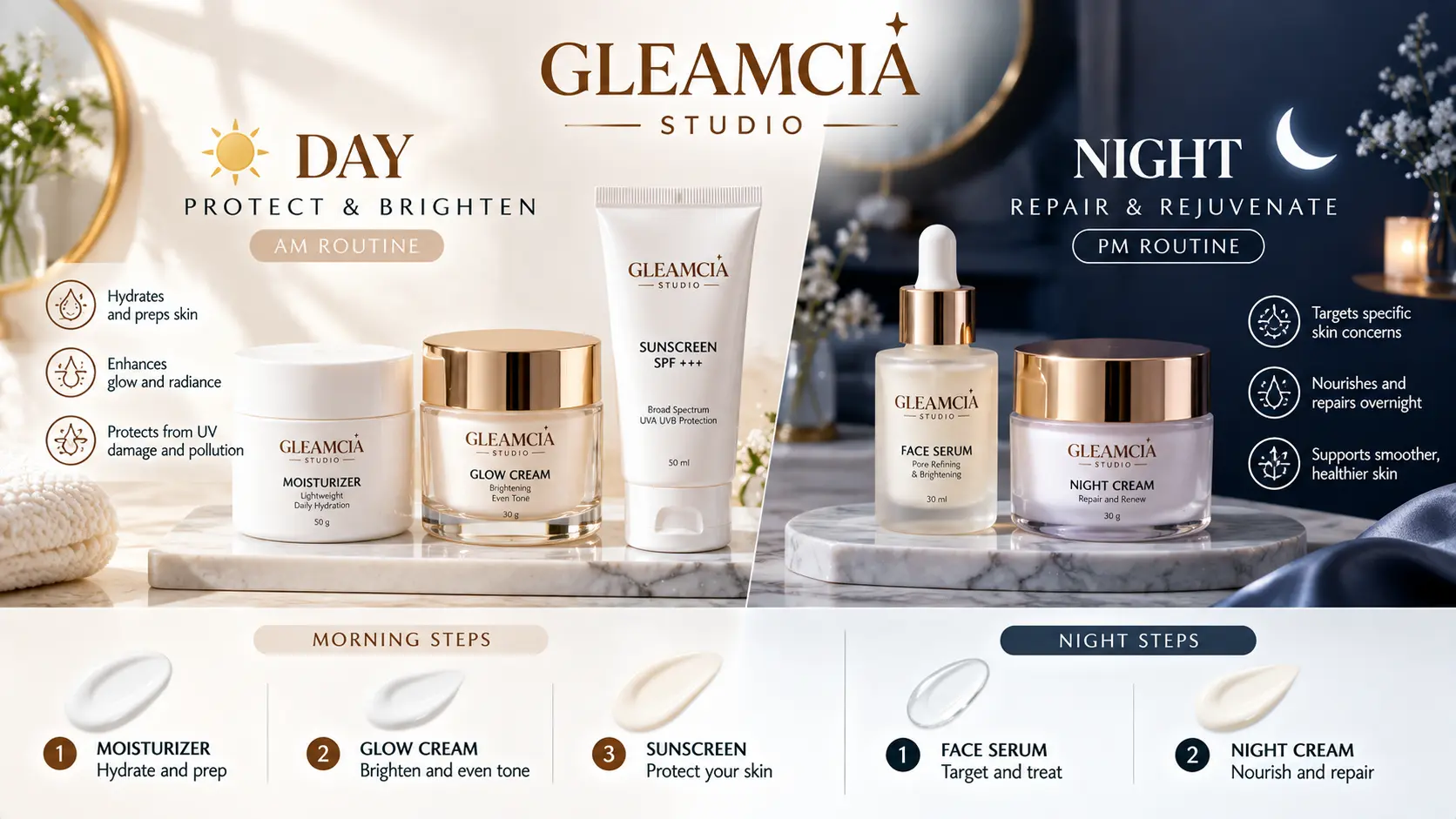
The practical routine structure:
- Morning: Regular moisturizer or glow cream + SPF
- Evening: Night cream only (replaces your moisturizer step)
This is a clean, streamlined approach and is exactly how most dermatologists recommend integrating night cream into a routine.
Do Night Creams Actually Work?
Night creams work — but the results depend heavily on the formulation and the active ingredients inside them.
A night cream that contains no meaningful actives, just heavy emollients and fragrance, will hydrate the skin and nothing more. It may feel luxurious but it will not improve texture, fade dark spots, or reduce fine lines.
A night cream that contains retinol, peptides, or niacinamide at effective concentrations, used consistently over several months, delivers measurable changes. Skin texture improves, fine lines reduce over time, and hyperpigmentation fades gradually.
The research on retinol-based night treatments in particular is some of the most robust in dermatology — this is an active with decades of clinical data supporting its effectiveness at the concentrations used in over-the-counter formulas.
The timeline expectation is important: night cream results are not visible in days. Most people see meaningful improvement in texture and tone between 8 and 12 weeks of consistent use, with more significant results after 3 to 6 months. The skin biology simply does not move faster than that.
How to Layer Glow Cream, Moisturizer, and Night Cream Correctly
Morning routine:
- Cleanser
- Toner (optional)
- Serum (Vitamin C or targeted treatment)
- Glow cream or moisturizer — glow cream if your primary concern is brightness; standard moisturizer if hydration and barrier support is the focus
- SPF
Evening routine:
- Cleanser
- Toner (optional)
- Serum (niacinamide, peptides, or a hydrating serum)
- Night cream — replaces the moisturizer step
If you are using retinol: apply retinol serum or retinol-containing night cream 2 to 3 nights per week initially, not every night. On the nights you are not using retinol, a plain night cream or standard moisturizer is the right call.
What to Look for When Buying Any of the Three
Regardless of which product you are selecting, these markers signal a quality formulation:
- Active ingredients listed high on the ingredient list (higher position = higher concentration)
- Free from high-concentration alcohol (drying and barrier-damaging)
- Fragrance-free or low-fragrance, especially for night products with prolonged contact time
- Non-comedogenic label if you have acne-prone or oily skin
- Packaging that protects actives — Vitamin C and retinol degrade in clear packaging exposed to air and light; look for opaque or airless pump bottles
Avoid products where the main active ingredient appears at the very bottom of the ingredient list. That often signals a cosmetic or marketing quantity rather than a functional concentration.
What Does Each Product Cost in Pakistan?
Pricing across glow creams, moisturizers, and night creams in Pakistan reflects formulation complexity, brand, and bottle size.
A basic moisturizer without meaningful actives is available at low price points but delivers limited results beyond surface hydration. A moisturizer with hyaluronic acid, ceramides, and niacinamide at functional concentrations carries a higher price — and that gap reflects what is actually in the formula.
Glow creams tend to be priced higher than standard moisturizers because they include brightening actives like niacinamide or Vitamin C derivatives alongside the base hydration formula. The premium is justified if the active ingredient concentration is meaningful.
Night creams with retinol or peptides sit at the higher end of the price range. These are the most formulation-intensive products of the three, and cost reflects the active ingredient investment.
Buying a bundle that covers your morning and evening routine — a glow cream or moisturizer for daytime and a night cream for evenings — often reduces per-product cost compared to purchasing individually, and ensures the formulations are designed to complement each other.
Visit gleamcia.com for current pricing and available bundles, with nationwide delivery across Pakistan.
Why Choose Gleamcia
Gleamcia formulates every skincare product with a single standard: active ingredients at concentrations that deliver results, not just label decoration.
- Skincare products developed with clinically inspired formulations for real skin concerns
- Ingredients that are transparently listed and present at meaningful concentrations
- Products tested for safety before reaching your shelf
- Coverage of core skincare needs: hydration, brightening, and overnight repair
- Nationwide delivery from Karachi to all cities across Pakistan
- WhatsApp ordering at 0336 1223363 with personalised product guidance
Whether you are building a full routine or adding one targeted product, Gleamcia’s range gives you formulations that work — and ingredient honesty about why.
Frequently Asked Questions
1. Do dermatologists recommend night cream? Yes, dermatologists recommend night creams that contain meaningful active ingredients — particularly retinol, peptides, and ceramides. These actives work best overnight when the skin is in its natural repair phase and not exposed to UV light. A night cream without actives is simply a heavy moisturizer. For anti-ageing, texture improvement, and barrier repair, a well-formulated night cream is a worthwhile addition to an evening routine.
2. What are the downsides of using night cream? Night creams can clog pores if the formula is too rich and not non-comedogenic, which is a concern for acne-prone skin. Fragranced night creams carry a higher sensitisation risk due to prolonged skin contact during sleep. Night creams with retinol require a slow introduction — starting with daily use causes peeling and irritation. And they are not suitable for daytime use under SPF or makeup because the texture is too heavy.
3. Can I skip moisturizer and use night cream? At night, yes — a night cream fully replaces your evening moisturizer step. It provides hydration plus repair actives in one product. During the day, no — night creams are too heavy for daytime use, do not pair well with SPF, and often pill under makeup. For daytime, use a regular moisturizer or glow cream. At night, skip the moisturizer and apply your night cream directly after your serum.
4. Do night creams actually work? Night creams with active ingredients do work — the evidence for retinol, ceramides, and peptides is strong. Results build over consistent use: most people see texture improvement and reduced dullness around 8 to 12 weeks, with more visible changes in tone and fine lines at 3 to 6 months. Night creams that contain no meaningful actives, just heavy emollients, hydrate the skin but do not produce visible change beyond that. The formulation is what determines whether a night cream works.
5. What is the number one night cream for most skin types? There is no single best night cream for all skin types, but the characteristics of a top-performing night cream are consistent: retinol or peptides for repair, niacinamide for barrier support and tone, ceramides for moisture retention, and a fragrance-free formula for safe overnight contact. For Pakistani skin dealing with hyperpigmentation from sun exposure, a night cream combining niacinamide and ceramides addresses the two most common concerns. Browse the Gleamcia Skin Care range for options suited to these needs.
6. What is the difference between a glow cream and a regular moisturizer? A glow cream is a moisturizer that also contains brightening actives — typically niacinamide, Vitamin C derivatives, or alpha arbutin — to target dullness and uneven tone alongside hydration. A regular moisturizer focuses purely on maintaining moisture balance and barrier protection without targeted brightening. A glow cream is the better choice if radiance or dark spots are your concern. A basic moisturizer is the right choice if your skin is already balanced and you just need hydration support.
7. Can I use glow cream in the morning and night cream at night? Yes, and this is a practical two-product approach for most skin types. Apply your glow cream (with or without a serum underneath) in the morning, followed by SPF. In the evening, apply a serum and then your night cream. This gives you brightening support during the day and repair support overnight without overcrowding your routine with unnecessary steps.
8. Which skin type should use a glow cream vs a moisturizer? Both products work across skin types, but the texture matters. Oily skin benefits from a lightweight glow cream or water-gel formula with niacinamide. Dry skin benefits from a richer glow cream or moisturizer with ceramides and glycerine. Combination skin can use a medium-weight glow cream across the face or apply a lightweight formula to the T-zone and a richer one to drier areas. Glow creams add the benefit of active brightening on top of hydration, which makes them particularly useful for anyone dealing with post-acne marks, sun tan, or seasonal dullness.
Not Sure Which One Your Skin Needs?
Order from the Gleamcia Skin Care range via our online store and get personalised advice on which products match your skin type and concerns. Message us directly on WhatsApp at 0336 1223363 and our team will help you choose between a glow cream, moisturizer, and night cream based on what your skin is actually doing right now.
Gleamcia delivers nationwide across Pakistan — from Karachi to Lahore, Islamabad to Quetta.