Introduction
Dark circles are one of those things that a concealer hides in the morning but nothing seems to fully fix over time. The question a lot of people reach when they finally get serious about treating them is a fair one: can eye cream fix dark circles, or is it all packaging and marketing with very little actual result?
The honest answer sits in the middle. Eye cream can genuinely reduce the appearance of dark circles when the formula contains the right active ingredients — but it cannot fix every type of dark circle, and it is not a substitute for addressing the underlying cause. What it can do depends heavily on why your dark circles are there in the first place.
This blog breaks down the causes, what skincare can realistically do, which ingredients to look for, and where topical treatment reaches its limit. Browse the Gleamcia Skin Care range for targeted eye treatment and skincare products formulated for real results.
What Causes Dark Circles Under the Eyes?
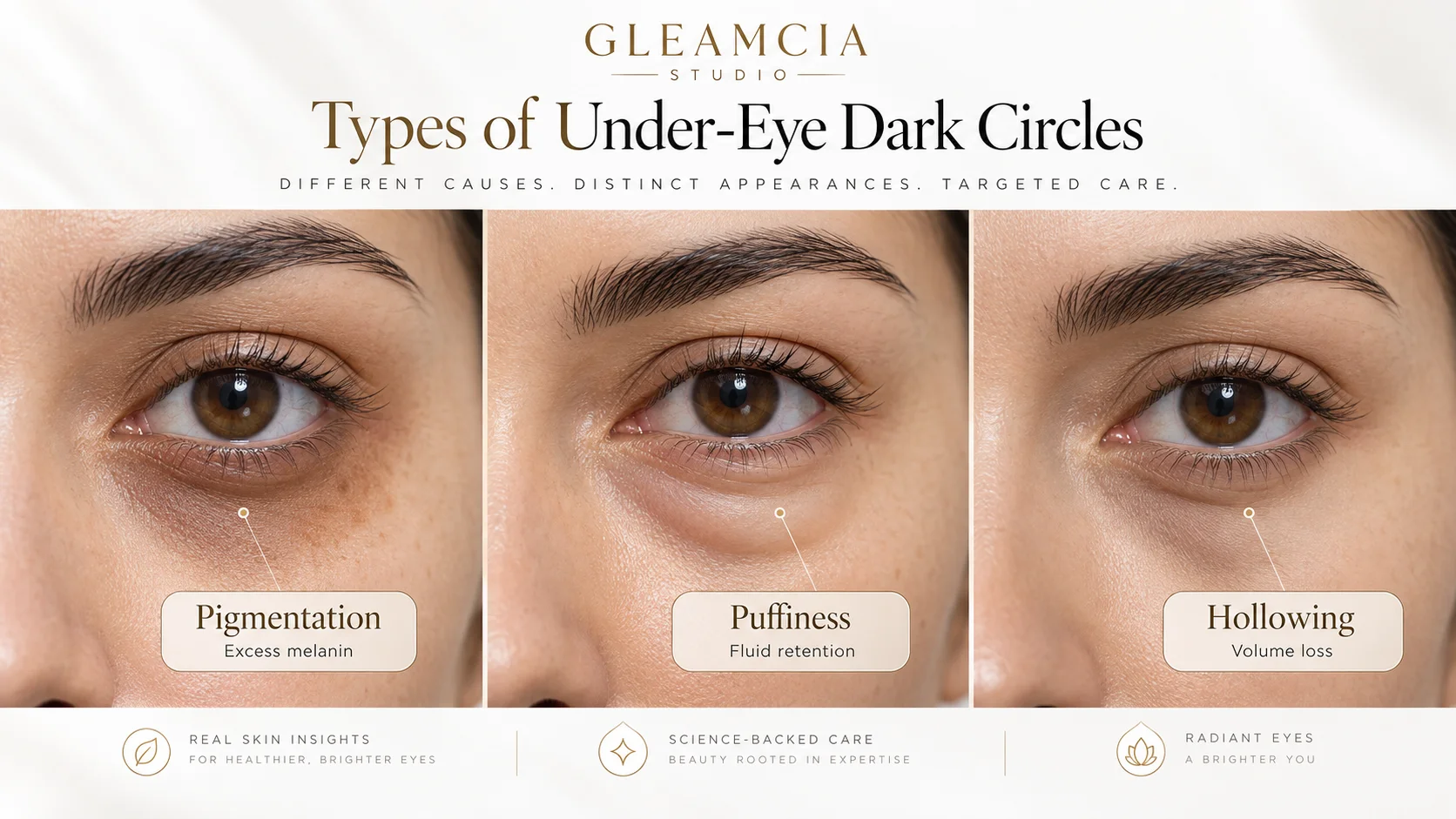
Dark circles are not one single problem. They show up for several different reasons and the cause changes what will actually help.
Pigmentation: Post-inflammatory hyperpigmentation around the eye area, often from sun exposure, chronic rubbing, or skin that naturally produces more melanin in that zone. This type looks brown or greyish and is most common in South Asian skin tones. It is the most treatable type with skincare.
Vascular or translucent skin: The skin under the eye is the thinnest on the face. When blood vessels show through thin skin, dark circles appear bluish or purplish. This type is genetic and structural. Skincare can reduce it mildly but cannot eliminate it.
Hollowing or tear trough: As skin loses collagen and volume with age, the area under the eye becomes sunken, creating a shadow. This is structural. Skincare will not address a tear trough.
Lifestyle factors: Lack of sleep, chronic stress, dehydration, and high screen time all worsen dark circles by increasing puffiness, reducing circulation, and accelerating fluid pooling under the eye. These are reversible with habit changes, and targeted skincare supports that process.
Allergies and eye rubbing: Seasonal allergies trigger histamine responses around the eyes, causing dilation of blood vessels and discolouration. Repeated rubbing from allergies causes inflammation-driven pigmentation over time.
Most people have a combination of two or three of these causes, which is why dark circle treatment rarely works with one product alone.
Can Eye Cream Fix Dark Circles? What It Actually Does
Eye cream formulated with the right actives can meaningfully reduce dark circles caused by pigmentation, dehydration, and poor circulation. For these types, consistent use over 8 to 12 weeks produces visible lightening and a more refreshed appearance.
Where eye cream is limited: it cannot reverse hollow tear troughs, it will not completely eliminate genetic translucency, and it will not fix dark circles that are primarily caused by uncorrected allergies or chronic sleep deprivation if those habits stay in place.
Think of eye cream as doing the work within its lane very well. If your dark circles are primarily pigmentation-based, which is the most common type in Pakistan’s population, a well-formulated eye cream with brightening actives will deliver real results. If there is also volume loss or structural hollowing involved, eye cream handles the surface component while other interventions handle the structure.
The key is matching the eye cream to the cause. A caffeine-based formula reduces puffiness and improves circulation. A vitamin K or retinol formula supports the thin under-eye skin. A niacinamide or Vitamin C formula targets pigmentation directly. Using a caffeine eye cream when pigmentation is the main issue will not deliver the same results as using a brightening formula.
The Best Skincare Ingredients for Dark Circles Under the Eyes
Vitamin C: Brightens existing pigmentation under the eye and supports collagen production in the thin under-eye skin. Use a stabilised form and look for it paired with other brightening actives for best effect.
Niacinamide: Reduces melanin production at the skin surface level, tackles inflammation-related pigmentation, and improves the skin barrier. One of the safest actives for the sensitive eye area and suitable for daily use.
Caffeine: Constricts blood vessels temporarily and reduces fluid pooling. Addresses puffiness and the bluish tint from visible vasculature. Works best used in the morning when puffiness is highest.
Retinol: Increases cell turnover, thickens the under-eye skin slightly over time, and reduces the appearance of dark circles caused by translucency. Requires a gentle introduction around the eye area — lower concentrations than what you would use elsewhere on the face.
Vitamin K: Supports the repair of broken capillaries and reduces the appearance of bluish discolouration. Often included in formulas targeting vascular dark circles.
Hyaluronic acid: Plumps the thin under-eye skin with hydration, which reduces the appearance of fine lines and mildly reduces the shadowing effect from hollowing. Not a fix but a meaningful contributor.
Peptides: Support collagen synthesis over time, thickening the under-eye skin and improving the surface texture. Best used consistently at night.
The most effective eye creams combine two or three of these actives rather than relying on a single ingredient.
Who Should Use Eye Cream for Dark Circles?
Eye cream for dark circles is relevant for a wider age range than most people assume.
People in their late 20s and early 30s in Pakistan are already dealing with pigmentation-driven dark circles from UV exposure and screen time. Starting a targeted eye cream at this stage is a preventive and corrective move at the same time.
From the mid-30s onward, the picture becomes more complex as volume loss adds a structural component to the dark circles. Eye cream handles the surface and pigmentation side; the deeper structural concern requires different solutions.
Specifically worth using if you:
- Have noticeable brown or greyish pigmentation under the eyes that worsens with sun exposure
- Wake up with puffy eyes that take hours to settle
- Have fine lines forming under the eye that make dark circles look deeper
- Are dealing with post-pregnancy fatigue-related dark circles
- Have always had dark circles and want to reduce how prominent they look
People with very sensitive skin or eczema around the eye area should look for fragrance-free, minimal-ingredient formulations and patch test before full application.
What Am I Lacking If I Have Dark Circles?
Dark circles are not always a deficiency issue, but certain nutritional gaps do contribute.
Iron deficiency is one of the most common internal causes of persistent dark circles in Pakistan, particularly among women. Low iron means reduced oxygen delivery to tissues, which causes the blood under the thin eye skin to appear darker. A simple blood test confirms whether this is a factor.
Vitamin K deficiency affects the blood’s ability to clot and repair broken capillaries, contributing to the bluish discolouration some people have under the eyes.
Vitamin C deficiency slows collagen production, which thins the skin and makes the blood vessels below more visible over time.
Vitamin B12 deficiency is linked to skin pallor and dark discolouration, and is more common in vegetarian and vegan diets where animal sources of B12 are limited.
Dehydration is technically not a nutrient deficiency but its effect on dark circles is direct. Under-eye skin that is dehydrated looks darker, more sunken, and more lined. Most people significantly underestimate how much their water intake affects how their under-eye area looks.
If dark circles have appeared or worsened recently without obvious lifestyle causes, checking for iron and B12 levels with a basic blood test is a reasonable first step before investing in topical treatments. Address the internal cause alongside the external one.
Eye Cream vs Under-Eye Serum: Which Works Better for Dark Circles?
| Feature | Eye Cream | Under-Eye Serum |
| Texture | Rich and emollient | Lightweight and fast-absorbing |
| Best for | Hydration, barrier support, overnight repair | Targeted active ingredient delivery |
| Active ingredient delivery | Moderate concentration within emollient base | Higher concentration, penetrates faster |
| Suitable for daytime use | Yes | Yes, under moisturizer or SPF |
| Suitable for nighttime use | Best suited for PM use | Can be used AM and PM |
| Addresses puffiness | Yes, especially caffeine formulas | Yes, especially with caffeine or peptides |
| Addresses pigmentation | Yes, with Vitamin C or niacinamide | Yes, often more effectively due to concentration |
| Addresses thin under-eye skin | Yes, with retinol or peptides | Yes, but cream texture is more occlusive overnight |
| Best starting point for beginners | Yes — one product covers most bases | Better as a second step once basics are in place |
For most people, starting with a well-formulated eye cream covers the basics. Once results plateau or specific concerns remain, adding an under-eye serum as a first step before the eye cream creates a more complete treatment layer.
How to Use Eye Cream for Dark Circles Correctly
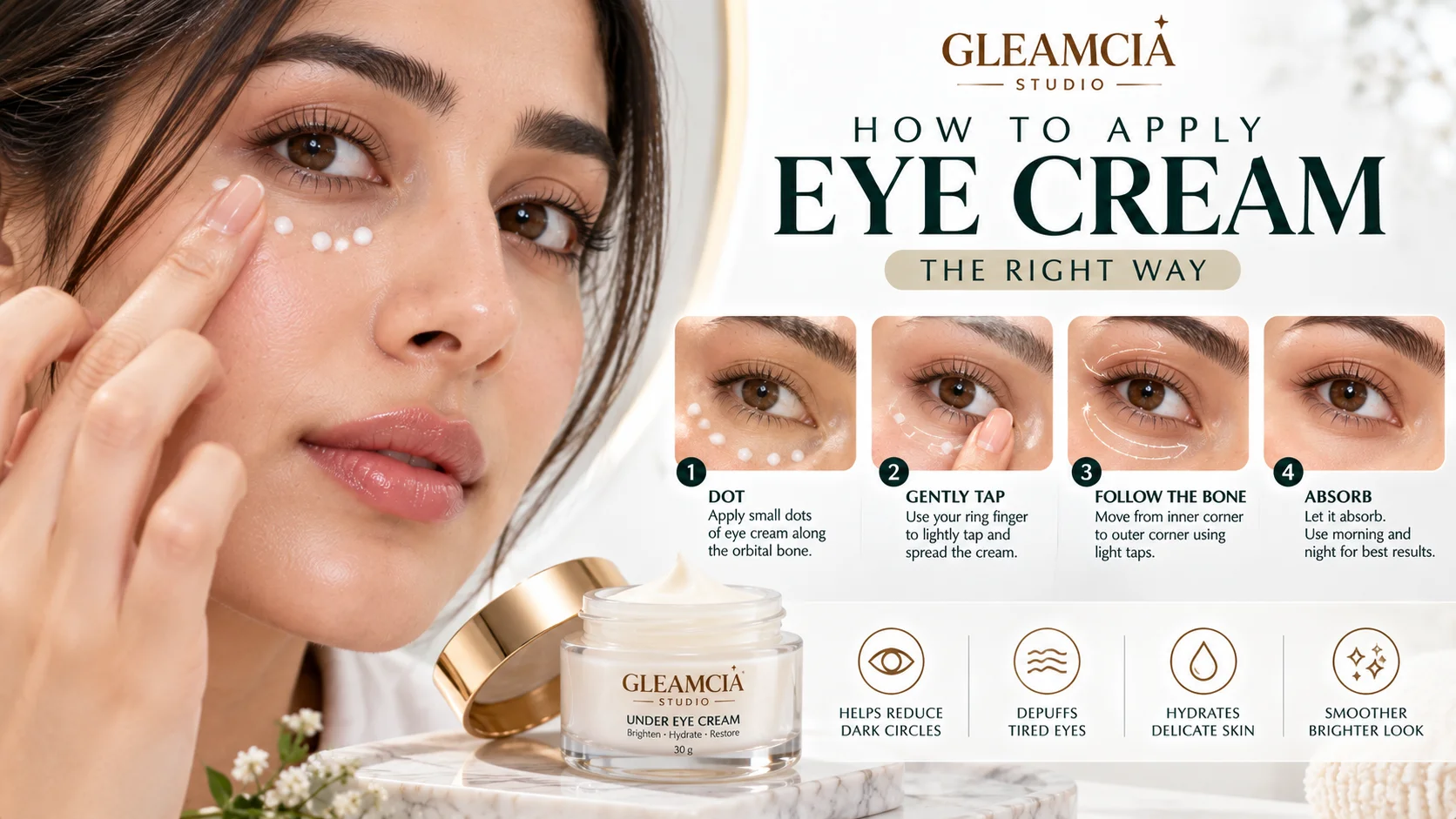
Application technique matters more around the eye than anywhere else on the face. The skin there is thin, fragile, and absorbs differently.
- Apply eye cream after your toner or serum and before your moisturizer, as the last treatment step before SPF in the morning or the final step in your evening routine.
- Use your ring finger to apply. It applies the least pressure of all fingers, which reduces mechanical stress on the skin around the eye.
- Take a pea-sized amount for both eyes combined. More product does not mean more results here. Excess cream around the eye migrates into the eye itself and can cause irritation.
- Dot the product lightly along the orbital bone, not directly under the lashes. Work from the inner corner toward the outer corner in small tapping motions rather than rubbing.
- Pat gently until absorbed. Do not tug or pull the skin during application.
- In the morning, follow with SPF after the eye cream has absorbed. UV exposure directly worsens pigmentation-type dark circles.
How Soon Will Eye Cream for Dark Circles Show Results?
Results from an eye cream for dark circles build over weeks of consistent use. There is no overnight fix here, and any product claiming otherwise is overstating what topical skincare can do.
For puffiness from caffeine-based formulas: a mild improvement is often noticeable within days as circulation improves. The puffiness-reducing effect is the fastest-acting result you can expect.
For pigmentation lightening: expect 6 to 8 weeks of consistent morning and evening use before visible brightening becomes apparent. The under-eye area regenerates slowly because of how thin and delicate the skin is. Patience and consistency are the two requirements.
For overall improvement in the appearance of dark circles: the 3-month mark is where most people with pigmentation-type dark circles see meaningful change. By then, active ingredients have had enough cycle time to reduce melanin production and improve the skin surface.
Individual results vary based on the type of dark circles you have, how consistently the product is applied, whether SPF is used daily, and whether any underlying causes like iron deficiency or sleep disruption have been addressed.
According to the American Academy of Dermatology, topical treatments for under-eye discolouration work best when the root cause is identified and addressed alongside consistent product use.
What Skincare Cannot Fix: The Honest Part
Skincare cannot fix dark circles caused by genetics alone, where the skin under the eye is structurally thin and the vasculature simply shows through. No amount of brightening serum addresses a structural issue.
It cannot reverse volume loss. If the hollowing under your eye is creating a shadow, that shadow is three-dimensional. A concealer can temporarily fill the shadow, and hyaluronic acid can mildly plump the surface, but skincare does not replace lost volume in the way dermal filler does.
It will not keep up with chronic sleep deprivation or ongoing dehydration. You can apply the most effective eye cream available and still have pronounced dark circles if you are consistently getting five hours of sleep and drinking two glasses of water a day. The product works within what your lifestyle allows.
And skincare will not address allergies causing histamine-driven puffiness and discolouration. If your dark circles flare up seasonally or after exposure to dust, treating the allergy is the route to treating that particular dark circle.
Knowing these limits helps set realistic expectations and directs you toward the interventions that will actually work for your specific situation.
Aftercare Tips for Eye Cream Users
Do:
- Apply SPF every morning after eye cream. UV exposure is the single biggest driver of worsening under-eye pigmentation.
- Be consistent morning and night for at least 8 weeks before assessing results.
- Store eye creams and serums with Vitamin C in cool, dark conditions to preserve the active.
- Address sleep, hydration, and diet alongside your topical routine.
- Patch test any new eye product on the inner arm before applying around the eyes, especially if your skin is sensitive.
Don’t:
- Apply eye cream on the eyelid unless the product specifically says it is suitable for that area.
- Use the same amount of pressure applying eye cream as you would a face moisturizer. The skin there is far more fragile.
- Switch products every few weeks — results take time and constant swapping prevents you from seeing any formula through to its potential.
- Skip SPF in winter. UV is present year-round and directly worsens pigmentation.
- Expect results in days. This is a weeks and months commitment.
What Does Eye Cream for Dark Circles Cost in Pakistan?
Formulation quality is the biggest driver of price differences in the eye cream category.
A basic eye cream with minimal actives can be found at low price points but will primarily provide hydration without meaningful impact on dark circles. A formula that includes niacinamide, caffeine, or vitamin C at effective concentrations costs more because the actives cost more to include at those levels.
Packaging also matters practically. Eye creams in jar packaging expose the product to air and bacteria with every use. Tube or pump packaging preserves the formula better, especially for Vitamin C and retinol-based formulas that degrade with oxidation. Products in better packaging are often priced higher, and that premium is worth it for actives that need protection.
Buying a morning and evening routine bundle — a caffeine eye cream for daytime puffiness and a peptide or retinol formula for nighttime repair — tends to offer better value per product than purchasing them individually. It also covers more of the causes of dark circles in a single purchase.
Visit gleamcia.com for current pricing on the Gleamcia Skin Care range, with nationwide delivery across Pakistan.
Why Choose Gleamcia
Gleamcia builds every product around one standard: active ingredients that are actually present at concentrations that do something, not just names on a label.
- Clinically inspired formulations developed around ingredients with real evidence behind them
- Targeted for skin concerns common in Pakistan, including sun-driven pigmentation around the eyes
- Every product quality-checked before dispatch
- Nationwide delivery from Karachi to all cities across Pakistan
- Full ingredient transparency so you know exactly what you are applying near your eyes
- WhatsApp support at 0336 1223363 for personalised product guidance
When you buy from Gleamcia, you are buying a formula built to work, with nothing hidden in the ingredient list.
Frequently Asked Questions
1. What is the best skincare for dark circles under the eyes? The best skincare for dark circles depends on the type. For pigmentation-based dark circles, which is the most common type in Pakistan, a formula with niacinamide, Vitamin C, or alpha arbutin gives the best results over consistent use. For puffiness and circulatory dark circles, caffeine is the most effective active. For thin under-eye skin, retinol or peptides applied at night support the skin structure over time. A well-rounded eye cream combining two or three of these actives covers most people’s needs without layering multiple products. Browse the Gleamcia Skin Care range for options formulated with these actives.
2. What is the best product to remove dark circles under the eyes? No topical product removes dark circles completely, but a consistent eye cream with brightening actives reduces them significantly over 8 to 12 weeks. Look for a product with niacinamide or Vitamin C for pigmentation, caffeine for puffiness, and peptides for overall skin quality under the eye. The best product for you specifically is the one that matches the cause of your dark circles. Gleamcia’s skin care range includes targeted options with these active ingredients, available with nationwide delivery across Pakistan.
3. What am I lacking if I have dark circles? The most common internal causes of persistent dark circles are iron deficiency, vitamin B12 deficiency, vitamin K deficiency, and chronic dehydration. Iron deficiency in particular is very common in Pakistan, especially among women, and directly contributes to dark, dull under-eye appearance by reducing oxygen delivery to the tissue. If your dark circles appeared or worsened recently, a basic blood test checking iron and B12 is a practical first step. Addressing internal deficiencies alongside topical skincare delivers better results than topical treatment alone.
4. How can I get rid of dark circles under my eyes quickly? Fast improvement is possible for puffiness and mild discolouration but not for deep pigmentation. In the short term: apply a chilled caffeine-based eye cream or cold compress to reduce swelling and temporarily brighten the area. Get adequate sleep the night before. Stay well hydrated. These steps reduce how pronounced dark circles look within hours. For lasting reduction, 6 to 8 weeks of consistent eye cream use with brightening actives is the realistic minimum. Skincare works progressively, not overnight.
5. What do dermatologists recommend for dark circles under eyes? Dermatologists typically recommend identifying the cause of dark circles before selecting a treatment. For pigmentation-type dark circles, they most often recommend topical vitamin C, retinol, kojic acid, or hydroquinone-based formulas. For structural dark circles from volume loss, dermal fillers are the effective intervention, not topical products. For lifestyle-driven dark circles, addressing sleep, hydration, and any underlying deficiencies is the first step. Most dermatologists recommend SPF daily as a non-negotiable, as UV exposure is the biggest driver of worsening under-eye pigmentation. According to the American Academy of Dermatology, a consistent SPF and active topical routine is the foundation for improving skin discolouration.
6. Can eye cream fix dark circles caused by genetics? Eye cream can reduce genetically inherited dark circles but not eliminate them. Genetic dark circles are often a combination of naturally thin under-eye skin and higher melanin production in that zone. Brightening actives like niacinamide and vitamin C reduce surface pigmentation and improve overall skin quality over time. The appearance becomes less pronounced with consistent use, but the underlying structure remains. Managing sun exposure and using SPF daily prevents them from worsening.
7. Is eye cream safe to use around the eyes every day? Yes, when the formula is designed for the eye area and free from high-concentration alcohol, strong fragrance, or sensitising ingredients. The under-eye skin is thinner and more permeable than facial skin, so formulations for this area are typically gentler than face products. Daily use morning and evening is appropriate for most well-formulated eye creams. Start with evening-only use for one to two weeks if you have sensitive eyes, and introduce morning use once you are confident the product is well tolerated.
8. What is the difference between eye cream and regular face moisturizer for dark circles? Eye cream is specifically formulated for the thinner, more sensitive skin around the eye, with targeted actives for puffiness, pigmentation, and fine lines in that zone. Regular face moisturizer provides hydration but does not contain the concentrated actives needed for the unique concerns of the under-eye area. Applying a face moisturizer under the eye as a substitute for eye cream hydrates the surface but does not address the dark circles themselves. If dark circles are a specific concern, a dedicated eye cream or under-eye serum is the more effective choice.
Ready to Treat Your Dark Circles with the Right Formula?
Start with a targeted approach based on your specific type of dark circles. Order from the Gleamcia Skin Care range via our online store with nationwide delivery across Pakistan. You can also message us on WhatsApp at 0336 1223363 and our team will guide you to the right product for your under-eye concern.
Gleamcia ships from Karachi to every city across Pakistan. The right eye cream, used consistently, makes a real difference.