Walk into any pharmacy and you will find an entire shelf dedicated to sunscreen. Different SPF numbers, different textures, different labels. It is genuinely confusing if you do not know what you are looking for.
The truth is, knowing how to choose sunscreen does not require a skincare degree. It comes down to understanding three things: your skin type, the UV environment you are in, and what the label is actually telling you.
Pakistan, and particularly Karachi, has one of the highest UV indexes in the region. Year-round heat, intense sun exposure, and long outdoor hours mean sunscreen is not a summer-only step. It is a daily one. This guide breaks down everything you need to choose the right SPF for your skin and actually use it correctly.
The Gleamcia Sunscreen SPF+++ Sun Block 50ml is formulated for daily wear across all skin types, with a lightweight matte finish designed for Pakistan’s climate.
What Sunscreen Actually Does and Why It Matters for Skin Health
Sunscreen is a topical product that filters or blocks ultraviolet radiation before it penetrates the skin. There are two types of UV rays that reach the earth’s surface daily.
UVB rays are responsible for visible sunburn. They damage the outer layers of skin and are the primary driver of sunburn.
UVA rays go deeper. They are the ones behind premature ageing, pigmentation, and long-term skin damage. UVA rays are present every single day, in every season, regardless of cloud cover, and they pass right through glass windows.
Broad-spectrum sunscreen protects against both. Any sunscreen that does not say “broad-spectrum” on the label is only partially doing the job.
According to the American Academy of Dermatology, the key criteria for choosing a sunscreen are SPF 30 or higher, broad-spectrum protection, and water resistance. Getting these three right is the foundation.

Who Needs to Know How to Choose Sunscreen?
Short answer: everyone. But certain concerns make choosing the right formulation more important than others.
You especially need a targeted approach if you:
- Have oily, acne-prone, or sensitive skin that reacts badly to heavy textures
- Are dealing with hyperpigmentation, dark spots, or post-acne marks (UV exposure directly worsens both)
- Use any brightening or exfoliating product in your routine, which increases sun sensitivity significantly
- Spend time outdoors in Pakistan’s climate where the UV index regularly hits severe levels
- Are in your twenties or thirties and want to prevent the skin ageing that starts accumulating quietly in this decade
- Have darker skin tones and are concerned about white cast or pilling from certain sunscreen formulas
Skin type shapes the formulation you choose. UV exposure shapes the SPF number. Understanding both is how to choose sunscreen that you will actually keep using.
How to Choose Sunscreen: The Key Factors Explained
SPF Number
SPF stands for Sun Protection Factor. It measures how well a sunscreen filters UVB rays specifically.
SPF 15 blocks approximately 93% of UVB rays. SPF 30 blocks approximately 97%. SPF 50 blocks approximately 98%. The difference between SPF 30 and SPF 50 sounds small as a percentage, but in practice the gap matters when you are spending extended time in direct sun.
For everyday indoor use with some outdoor exposure, SPF 30 is a reasonable minimum. For outdoor activities, commuting in Karachi’s sun, or anyone with hyperpigmentation concerns, SPF 50 or higher is the more protective choice. The Gleamcia Sunscreen SPF+++ is formulated at a high SPF level designed for Pakistan’s intense UV conditions.
Broad-Spectrum Protection
This label tells you the sunscreen protects against both UVA and UVB rays. Without it, you are only getting partial protection. Always look for “broad-spectrum” on the label. No exceptions.
Water Resistance
Relevant if you sweat, swim, or spend extended time outdoors. Water-resistant formulations maintain their SPF level for 40 to 80 minutes in water before reapplication is needed.
Formulation and Finish
This is where skin type comes in. Oily or acne-prone skin needs lightweight, non-comedogenic formulas with a matte finish. Dry skin can handle richer textures. Sensitive skin is often better suited to physical or mineral formulations.
Mineral vs Chemical Sunscreen: Which One Should You Choose?
This is the question that trips most people up. Here is a clean breakdown of what each type actually is and how to decide.
| Feature | Mineral Sunscreen | Chemical Sunscreen |
|---|---|---|
| Active ingredients | Zinc oxide, titanium dioxide | Avobenzone, oxybenzone, octinoxate, others |
| How it works | Sits on top of skin and reflects UV rays | Absorbs into skin and converts UV energy to heat |
| Texture on skin | Can feel thicker, may leave white cast | Usually lighter, more invisible finish |
| Suitable for sensitive skin | Often preferred for reactive skin types | May cause irritation for sensitive skin |
| Finish on darker skin tones | Can leave visible white residue | Blends more seamlessly, no white cast |
| Onset of protection | Works immediately on application | Needs 15-20 minutes to absorb before sun exposure |
| Pore-clogging risk | Generally considered non-comedogenic | Varies by formulation |
| Ideal for | Sensitive, dry, or reactive skin types | Oily, combination, or darker skin tones |
| Durability in heat and sweat | Can degrade faster in heat | More stable in Pakistan’s warm climate |
For most skin types in Pakistan, a well-formulated chemical or hybrid sunscreen with a lightweight finish is the more practical daily choice. Mineral options are worth considering for sensitive skin, but the white cast concern is real for medium to deep skin tones.
When choosing between mineral vs chemical sunscreen, the formulation that feels comfortable enough to wear daily is the one that will actually protect you.
Benefits of Using the Right Sunscreen Daily
Choosing correctly and applying consistently delivers more than just sun protection:
- Prevents new dark spots and hyperpigmentation by blocking the UV trigger that drives excess melanin production
- Protects existing acne marks from deepening since UV exposure is one of the main reasons post-acne pigmentation lingers
- Slows visible skin ageing including fine lines, loss of firmness, and uneven texture caused by UVA damage over time
- Supports the results of brightening products by preventing UV from undoing the progress your serum or night cream is making
- Maintains an even skin tone over months and years of consistent use
- Provides a base that makes makeup sit better on the skin throughout the day
- Reduces the cumulative UV damage that builds quietly from daily outdoor exposure across Pakistan’s climate
How to Apply Sunscreen Correctly: Step by Step
Knowing how to choose sunscreen is only half of it. Correct application is where the protection actually happens.
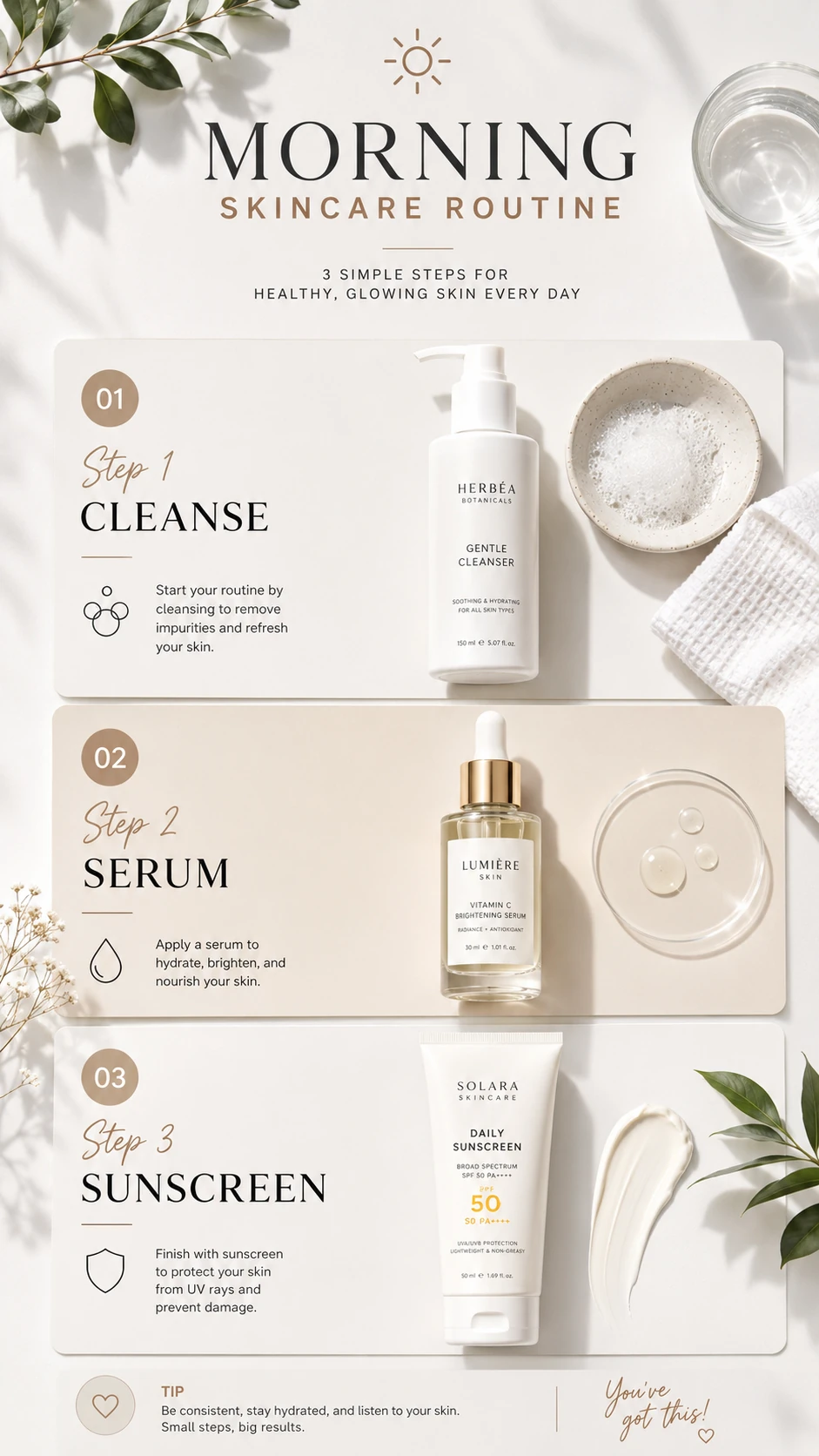
Step 1: Cleanse first. Start with a clean face. The Gleamcia Brightening Face Wash 100ml removes overnight residue and preps the skin for even product absorption. Rinse with lukewarm water and pat dry.
Step 2: Apply any serum or treatment product. If you use a serum, apply it before sunscreen. The Gleamcia Pore-Refining & Brightening Serum 30ml goes on after cleansing and before SPF. Give it 60 to 90 seconds to absorb.
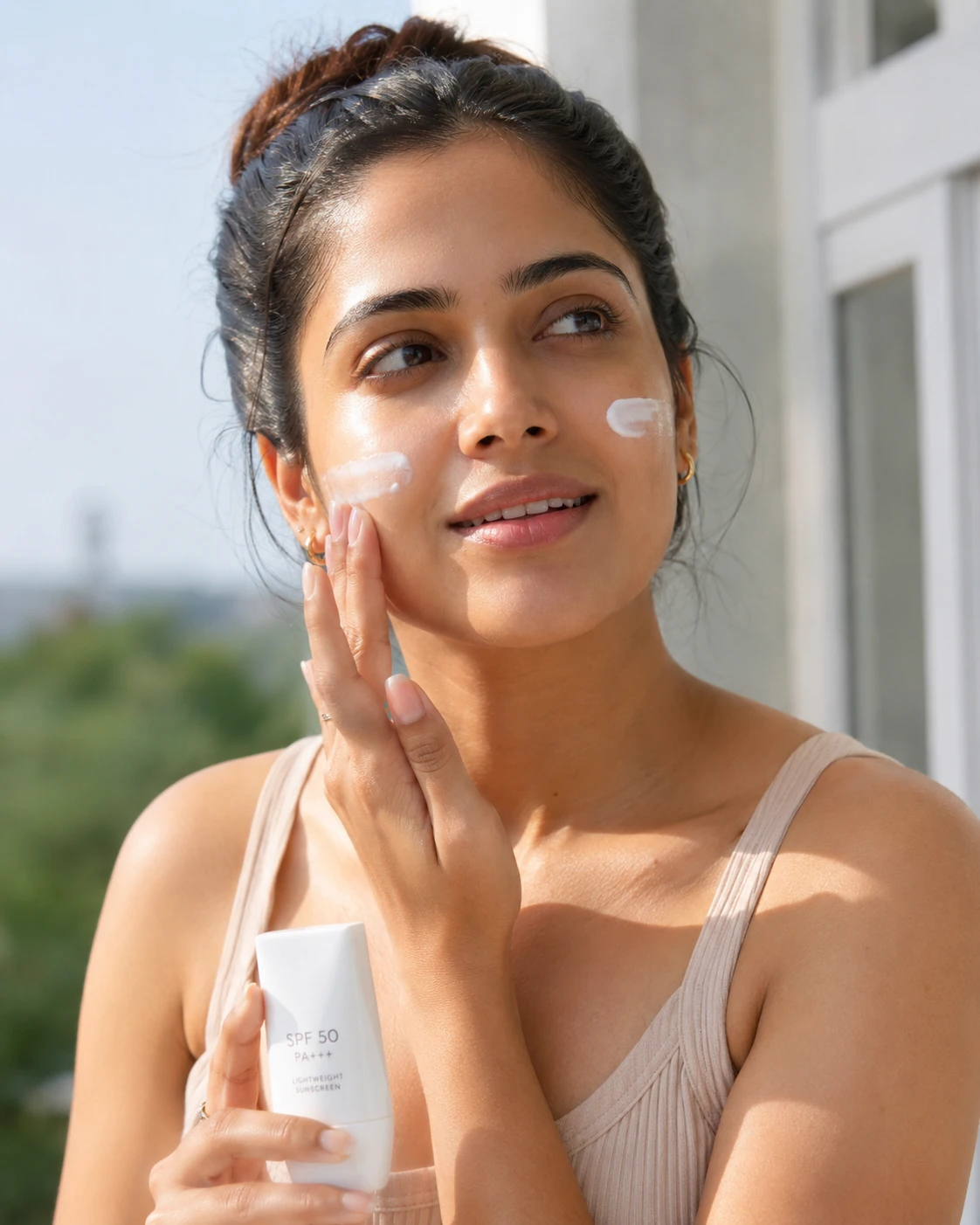
Step 3: Apply sunscreen generously. Use around half a teaspoon for the face alone. Most people apply too little, which reduces the SPF protection significantly. Apply the Gleamcia Sunscreen SPF+++ evenly across the full face, neck, and any exposed skin. Do not forget the ears and the back of the neck.
Step 4: Wait before heading out. Give sunscreen 10 to 15 minutes to settle before applying makeup or stepping into direct sunlight.
Step 5: Reapply every 2 hours outdoors. Sunscreen does not last all day. Sweat, heat, and time all reduce its effectiveness. Reapply every 2 hours during outdoor exposure.
SPF 30 vs SPF 50: How to Choose the Right Number for Pakistan
| Scenario | Recommended SPF |
|---|---|
| Mostly indoors, near a window | SPF 30 minimum |
| Daily commute in Karachi | SPF 50 or higher |
| Outdoor activities, sports, beach | SPF 50 or higher |
| Using brightening or exfoliating products | SPF 50 or higher |
| Dealing with hyperpigmentation or acne marks | SPF 50 or higher |
| Winter in Pakistan with lower direct sun | SPF 30 minimum |
Pakistan’s UV index regularly exceeds 10 during summer months, which is classified as extreme. Even in winter, UV levels across Karachi and Sindh remain in the moderate to high range. For most people most of the year, SPF 50 or higher is the more appropriate daily choice.
How Long Does Sunscreen Protection Last?
Sunscreen is not a one-and-done morning application, though many people treat it that way.
A single morning application keeps you reasonably protected for about 2 hours of direct sun exposure. After that, the active ingredients degrade and protection drops. Sweat and heat accelerate this, both of which are unavoidable in Pakistan’s climate.
For indoor days with minimal direct sun exposure, reapplication may not be needed. For any outdoor time, reapplying every 2 hours is what actually keeps you protected through the day.
How Often to Use Sunscreen and When to Apply It
Every morning. Without exception.
Sunscreen is a morning-only product. Applying it at night has no benefit and is not recommended.
The routine: cleanse, apply any serums or treatments, then sunscreen as the final morning skincare step before makeup if you wear it. This sequence matters because sunscreen applied over too many layers of other products tends to pill or sit unevenly.
One application per morning for indoor days. Reapply every 2 hours for outdoor days.
Sunscreen Do’s and Don’ts for Pakistani Skin
Do
- Apply sunscreen every morning as the last step of your skincare routine
- Use enough product. Half a teaspoon for the face is the right amount
- Choose broad-spectrum protection specifically, not just any SPF label
- Reapply when you have been outside for more than 2 hours
- Pair your sunscreen with a brightening serum for a complete skin-protection and skin-improvement routine
Don’t
- Use SPF in makeup as your only sun protection. It is never applied in enough quantity to provide the labelled SPF level
- Skip sunscreen on cloudy or overcast days. UVA rays penetrate cloud cover completely
- Apply a thin layer and assume it is enough. Under-application is one of the most common mistakes
- Store sunscreen in direct heat or sunlight, which degrades the active ingredients
- Wait until you are outdoors to apply. Sunscreen needs time to settle before sun exposure
Possible Side Effects and Precautions When Choosing Sunscreen
Most people tolerate broad-spectrum sunscreen without any reaction. A few things to be aware of:
If you have very sensitive or reactive skin and notice redness, stinging, or breakouts from a chemical sunscreen, switching to a mineral or physical formulation is worth trying. Zinc oxide and titanium dioxide are generally gentler on reactive skin.
If you are using retinoids, acids, or strong brightening actives in your routine, your skin is more sun-sensitive and a higher SPF with reliable reapplication matters even more.
For children under 6 months, consult a paediatrician before applying any topical sunscreen. For older children, mineral formulations are generally preferred.
How Much Does a Daily Sunscreen Cost in Pakistan?
Pricing for a quality daily sunscreen depends on formulation type, SPF level, bottle size, and whether you are buying a single product or as part of a skincare bundle.
A 50ml daily sunscreen with proper broad-spectrum protection is typically a 2 to 3 month supply with daily facial use. Broken down per day, the cost of reliable UV protection is far smaller than the cost of treating hyperpigmentation or UV-related skin concerns later.
The Gleamcia Sunscreen SPF+++ 50ml is available via our online store with nationwide delivery across Pakistan. Browse the full Gleamcia Skin Care range to pair it with a complete morning routine.
Why Choose Gleamcia Sunscreen
Gleamcia formulates for real skin types in Pakistan’s real climate. Not a generic SPF product but a lightweight, broad-spectrum formulation designed to be worn daily without the heavy or greasy finish that makes most people skip sunscreen altogether.
- Active-ingredient formulation with broad-spectrum UV protection designed for Pakistan’s UV index
- Lightweight matte finish suitable for oily, combination, and normal skin types
- Non-heavy texture that sits comfortably under makeup and through long days
- Quality-checked before every dispatch, nationwide delivery across Pakistan
- Transparent formulation with no vague claims, just reliable daily sun protection
Explore the complete Gleamcia shop for the full skincare range.
Frequently Asked Questions About How to Choose Sunscreen
1. Is SPF 30 enough or do I need SPF 50 in Pakistan?
For Pakistan’s climate, SPF 50 or higher is the more protective daily choice. Karachi and most of Sindh experience high to extreme UV levels for most of the year. SPF 30 blocks around 97% of UVB rays while SPF 50 blocks approximately 98%. The difference becomes more meaningful during extended outdoor exposure or if you are managing hyperpigmentation. The Gleamcia Sunscreen SPF+++ is formulated to cover this protection range for daily use.
2. What is the difference between mineral vs chemical sunscreen for daily use?
Mineral sunscreens use zinc oxide or titanium dioxide and sit on top of the skin to reflect UV rays. They are gentler for sensitive skin but can leave a white cast on medium to deep skin tones. Chemical sunscreens absorb UV energy and convert it to heat, offering a more invisible finish. For daily use across most Pakistani skin tones, a well-formulated chemical or hybrid sunscreen tends to be the more practical and wearable choice.
3. Should I use sunscreen indoors?
Yes. UVA rays, which cause pigmentation and skin ageing, pass through glass and are present even on overcast days. If you spend time near a window or commute by car during daylight hours, your skin is being exposed. A daily morning application remains worthwhile even for primarily indoor days.
4. Can I use sunscreen on oily or acne-prone skin without breaking out?
Yes, with the right formulation. Look for sunscreens labelled non-comedogenic and lightweight or gel-based. Applied on clean skin as the final morning step, a well-formulated sunscreen should not cause breakouts. The Gleamcia Sunscreen SPF+++ is formulated with a non-greasy matte finish suitable for oily skin types.
5. Does Gleamcia deliver sunscreen across Pakistan?
Yes. Gleamcia ships nationwide across Pakistan. Order the Gleamcia Sunscreen SPF+++ 50ml via our website at gleamcia.com or place your order on WhatsApp at 0336 1223363.
Your Sunscreen Decision Starts Here
Knowing how to choose sunscreen comes down to three criteria: broad-spectrum protection, SPF 50 or higher for Pakistan’s UV levels, and a formulation your skin type can tolerate daily. Get those right and you are protecting your skin from the one thing that causes more cumulative damage than almost anything else.
Order the Gleamcia Sunscreen SPF+++ Sun Block 50ml from Karachi and get it delivered anywhere in Pakistan. Pair it with the Gleamcia Brightening Face Wash and Gleamcia Pore-Refining & Brightening Serum for a complete morning routine that cleanses, treats, and protects. Or message us directly on WhatsApp at 0336 1223363 for a personalised routine recommendation.